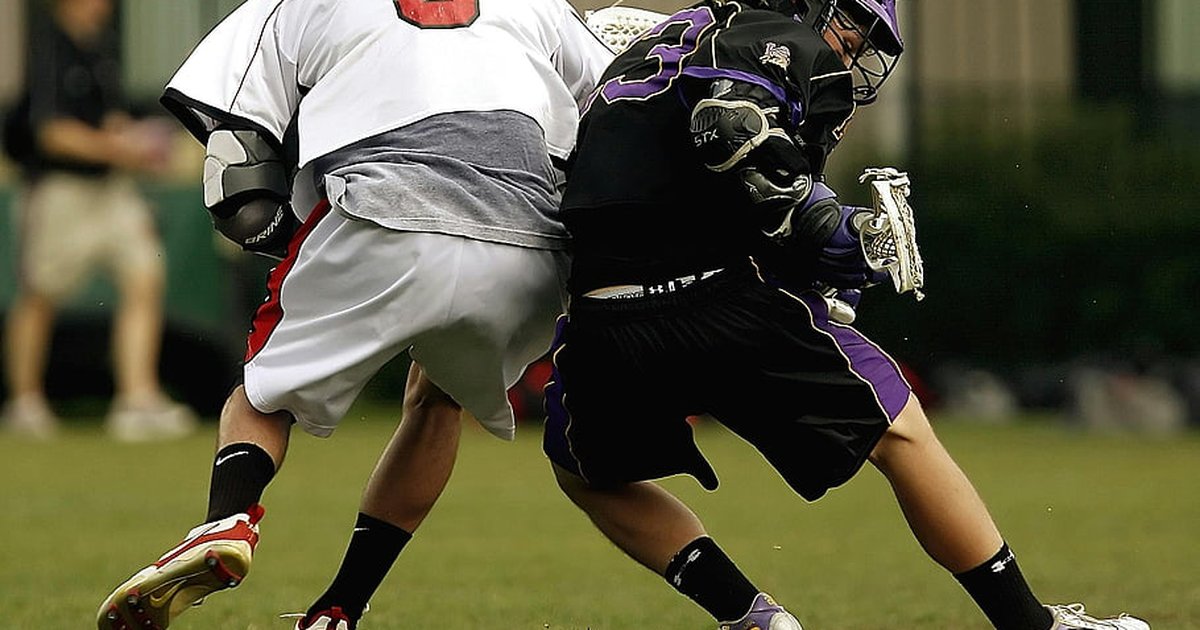
Defense Without Body Checking
Girls lacrosse defense is a positioning game. A defender may never body check, push, or use her stick against an opponents body, so everything legal she does is built from footwork, body position, and a stick held where the rules allow it. The rules below are the ones that decide most defensive whistles. Youth books modify some of them by age level, and your league adoption is the final word, but the structure is the same everywhere.
The Five Rules That Shape Girls Defense
Marking. To mark an opponent is to guard her closely, within a sticks length. Two famous rules both turn on that distance: a defender inside the 8 meter arc must be marking someone, and a defender in the shot lane is legal only while she is marking the shooter.
Three seconds. A defender may not stay inside the 8 meter arc for more than three seconds unless she is actively marking an opponent within a sticks length. Camping in front of the goal to clog the middle is a foul, and the attack gets a free position on the 8 meter arc.
Shooting space. A defender may not stand in the lane between the ball carrier and the goal, inside the critical scoring area, unless she is within a sticks length of the player she is marking. The rule exists because a shooter cannot see a defender hidden in her lane. It is the most argued call in the girls game and one of the most consistent once you know what officials watch.
Legal stick position. A defender holds her stick up, roughly vertical, in the window between the 10 o clock and 2 o clock positions, with both hands on the stick. A stick held horizontally across an opponent, or swung into the sphere around a players head, turns legal pressure into a foul.
The restraining line. At most eight defenders, goalie included, may stay in the defensive end. A defender who chases a clear too far upfield can put her team offside without touching anyone.
Defensive Fouls and What They Cost
| Foul | What it looks like | Usual result |
|---|
| Three seconds | Defender standing in the 8 meter arc unattached | Free position on the 8 meter arc |
| Shooting space | Defender in the shot lane, not marking anyone | Free position on the 8 meter arc |
| Blocking | Moving into the ball carriers path with no time for her to stop or change direction | Free position |
| Cross-check | Shaft used to hit, push, or displace an opponent | Free position, card if severe |
| Illegal stick contact | Stick contacting the body, or held horizontally into an opponent | Free position, card if dangerous |
| Check to the head | Any check entering the sphere around the head | Free position and a card |
| Offside | Too many defenders in the defensive end | Possession to the other team |
A Legal Defense Checklist
Run this before every defensive possession:
- Feet moving, body between your player and the goal, stick up in the legal window.
- Inside the 8 meter arc only while attached to a player within a sticks length.
- Never standing in the shot lane unless you are marking the shooter herself.
- Checks, where your level allows them, directed down and away from the body, never across it.
- Talk early: call out ball, help, and your player, so a slide does not leave a second attacker free.
How the Rules Change by Level
At the youngest youth levels there is no checking at all and defenders win the ball with position and interceptions. Modified checking arrives in the middle youth levels and transitional checking after that, each step defined in the USA Lacrosse youth book. The defensive positioning rules, three seconds, shooting space, and the ban on body contact, apply at every level, which is why footwork learned young never has to be unlearned.
Defending the Draw and the Fast Break, Within the Rules
Defense starts before the settled defense exists. On the draw, the players around the circle may fight for the loose ball with body position and their sticks, but the sphere around every head still applies and a stick swung into that space is a foul even in a scrum. Once possession is lost, the first defensive job is recovery: sprint to the defensive half, find the goal side position, and slow the break by defending the ball carrier with feet first. A defender who reaches with her stick at a fast break usually commits the foul that gives the break a free position finish. A defender who runs, angles the carrier toward the sideline and toward help, and keeps her stick in a legal checking position often ends the break with a settled possession instead.
Coaches teach the phrase feet before stick for exactly this sequence. It is a rules strategy as much as a technique: almost every common girls defensive foul, holding, pushing, reaching across the body, checking toward the head, begins with a defender whose feet stopped moving and whose stick went looking for the ball anyway.
The Free Position: What Good Defense Tries to Avoid Giving
When a defensive foul happens inside the critical scoring area, the cost is a free position: the attacker takes the ball at a hash on the 8 meter arc with a clear lane, defenders set 4 meters away, and the goalie faces a shot that starts close and unhurried. Defenders should picture that outcome during settled play, because it prices their choices. A reach in check that might pop the ball loose also might hand over a free position, and against a strong shooter the trade is bad. Disciplined defenders inside the arc defend with position, patience, and stick position that shows the official a legal picture, and they save their checks for the moment the ball carrier exposes the ball outside her protected space.
Outside the fan, the same foul costs possession and field position rather than a direct scoring chance, which is why veteran defenders play the boundary honestly: more aggressive checking where the price is a turnover battle, more conservative defending where the price is a free position.
Defending Without Fouling: A Practice Sequence
Coaches build legal defense with a simple progression families can recognize at practice. First, shadow defending: the defender mirrors a ball carrier at walking speed with no stick contact at all, learning to stay goal side. Second, approach and settle: the defender sprints to the carrier, breaks down into stance in the last steps, and presents her stick in the checking lane without swinging. Third, timed checks: against a coachs call, the defender executes one short, controlled check to the exposed part of the stick and recovers. Fourth, live play with a foul budget: a defender who commits two fouls in a scrimmage sits a shift, which makes legality a competitive skill rather than a lecture. A player who has trained in that order rarely panics into a foul, because her first habits are positional.
Defending the Crease and the Goal Circle
The goal circle, the crease around the goalie, has its own defensive law. Attackers may not step into it to shoot, and the goalie and her defenders handle the ball inside it under specific protections, including the goalies right to cover or rake the ball within the circle under the conditions the rulebook sets. A defender who understands the circle defends the edge of it rather than chasing into it, because most crease area fouls come from a defender following an attacker one step too far. When a shot is saved and the ball sits loose in front of the goal, the defensive play is position and patience: the goalie usually has the first right to that ball, and a defender crashing in can turn a save into a foul and a free position.
Reading the Officials Signals for Defensive Calls
Parents and players read defensive fouls faster once the signals are familiar. An official who extends an arm horizontally toward a defender is usually marking the holding or illegal contact family. A whistle followed by a free position setup at a hash mark tells the story of where the foul happened and what it cost. A yellow card shown to a defender means the contact crossed from foul into dangerous, and the team will play short while she serves her time. None of this requires a rulebook at the field. It requires watching the restart, because the restart is the sentence the official actually imposed, and it always states the price of the foul more clearly than the signal that announced it.
Defending the Draw Specialist and the Crease Roll
Two attacking patterns test legal defense hardest. The draw specialist who wins the ball to herself arrives at speed with her stick high, and the temptation is to reach for the exposed ball and foul through the sphere. The legal answer is to run with her, stay goal side, and wait for the moment her stick drops into a checking lane as she settles. The crease roll from behind the goal tests the other discipline: a defender must move her feet around the goal circle without stepping into it or reaching across it, and switch or hold according to the teams call. Both patterns reward the defender whose habits were built in the feet before stick order this guide teaches, and both punish the reacher within the first three possessions of a game.
Frequently Asked Questions
Can a defender stand in front of the goal to block shots?
Only while marking an attacker within a sticks length. A defender standing in the arc or in the shot lane guarding space commits a three seconds or shooting space foul, and the attack restarts with a free position.
Why did the official call shooting space when our defender never touched anyone?
Shooting space is a position foul, not a contact foul. Standing in the lane between the shooter and the goal without marking a player is enough, because the rule protects the shooter from a defender she cannot see.
Is a defender allowed to hold her stick across an attacker?
No. A stick held horizontally into an opponents body is illegal contact, and using the shaft to push or displace her is a cross-check. The legal stick is up, in the 10 to 2 o clock window.
What is the three second rule in girls lacrosse defense?
A defender may not stay inside the 8 meter arc, the close defensive area in front of the goal, for more than three seconds unless she is closely marking an attacker within a sticks length. The rule stops defenses from camping in front of the goalie and forces defenders to attach to a player or leave the arc.
Can a girls lacrosse defender use her body at all?
She can use body position: goal side placement, legal positioning between her player and the goal, and occupying space she is entitled to. What she may not do is hold, push, charge, or check the body. The girls game defends with feet and stick position, and officials call the contact that replaces them.