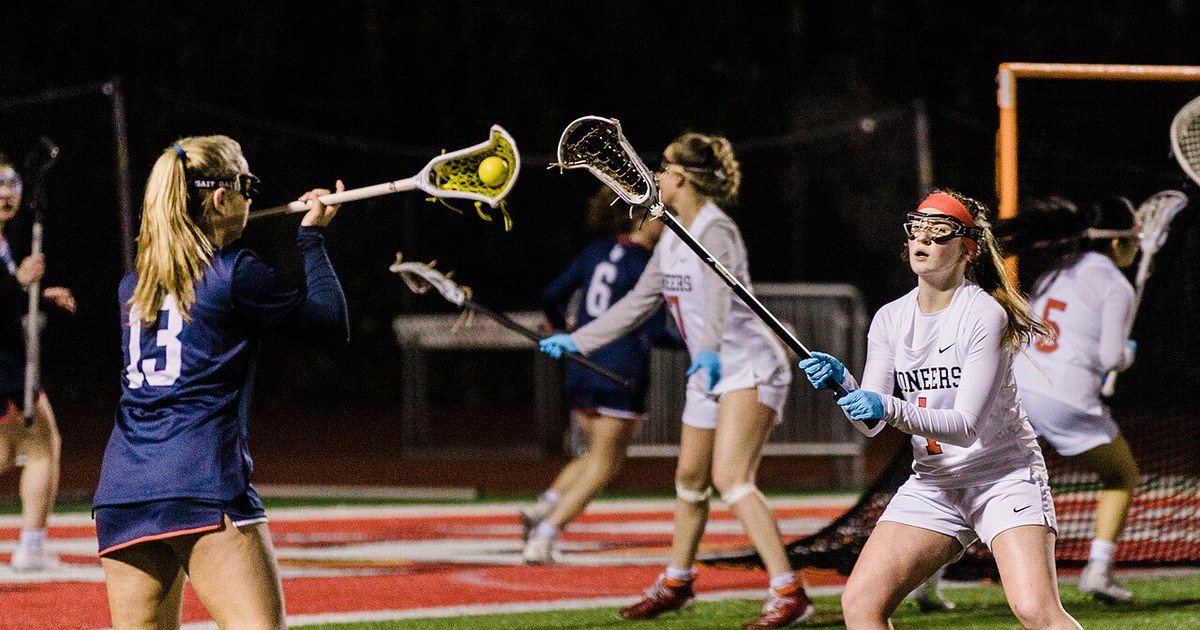
The Real Job of a Game Day Hairstyle
A girls lacrosse hairstyle has one job first: keep hair out of the eyes and off the face for a full game of sprinting, cutting, and checking, while fitting cleanly with goggles. Style comes second, and the good news is that the styles that hold best are also the ones players reach for most. Players interviewed in school reporting describe the high ponytail as the most common choice on their teams, often with braids worked into it, because it clears the goggle strap, stays put, and takes only a few minutes before a game.
Girls field players wear goggles, not helmets, so hair has to work with a goggle strap that sits across the forehead and around the back of the head. A style that bunches under that strap will shift all game. A style that sits above, below, or flat under the strap stays comfortable.
The Styles That Hold Up in Games
| Style | Best for | Why players use it |
|---|
| High ponytail | Most hair types, quick routines | Clears the face, works with goggles, fastest to do |
| French or Dutch braids into a ponytail | Thick or layered hair | Braids lock layers in so nothing escapes mid game |
| Double braids | Long hair, tournament days | Distributes weight, stays secure for hours |
| Braided ponytail | Players who want hold plus length | Braid keeps the tail from tangling in wind |
| Low bun | Players who dislike a swinging tail | Keeps all hair contained, neat under a strap |
| Bubble braid ponytail | Long hair, team matching looks | Elastics along the tail stop tangles and add team color |
The high ponytail is the default for a reason. Pull hair up and back, secure it high enough that the tail does not rest on the neck, and the goggle strap sits below it without pushing it loose. Adding one or two small braids along the sides before gathering the ponytail keeps short front layers from falling into the eyes, which is the most common ponytail failure.
Braids are the most secure option for long or layered hair. A single French braid, double Dutch braids, or braids that feed into a ponytail all pin hair flat to the head, so wind and contact do not pull strands free. Braided styles take longer, so many players braid before leaving home on game day rather than in the locker room.
Buns suit players who find a swinging ponytail distracting. A bun gathered at the back of the head, secured with elastics and pins, keeps every strand contained. Keep the bun low enough or high enough that the goggle strap does not sit directly on it, or the strap will work it loose.
Bubble braids have become a team favorite. A ponytail is sectioned with small elastics every few inches, and each section is gently puffed out. The elastics stop the tail from tangling during play, and using elastics in team colors turns a practical style into a matching team look for tournaments.
Making a Style Work With Goggles
Put goggles on after the style is finished and check three things. First, the strap should lie flat with no bun, braid ridge, or elastic bump directly under it. Second, no loose front strands should hang where they can stick to a sweaty forehead. Third, shake your head hard and jog in place. If the style moves in the mirror test, it will move in the second quarter.
A thin headband or a strip of pre wrap under the goggle strap helps players with fine or slippery hair. It gives the strap grip and catches the short hairs at the hairline that escape every style. Keep any headband flat and soft so it does not create pressure under the strap.
Hair Care Around Practice and Games
Tight styles worn every day can stress hair at the hairline. Vary the position of a ponytail across the week, loosen styles right after games, and avoid sleeping in game day braids. Wash out sweat and product after tournament days, and use a gentle detangler before brushing out braids, working from the ends up so you do not snap wet hair.
Players with curly or coily hair often protect hair by braiding it close and covering edges under the strap line, and players with very fine hair often get the best hold from braids rather than a smooth ponytail. The right style is the one that fits your hair, not the one a teammate wears.
Team Traditions Without the Stress
Many teams match ribbons, elastics, or a shared braid style for playoffs and tournaments. Those traditions are fun and build team identity, and they work best when the base style is still the secure one each player trusts. Pick the matching element, such as ribbon color or elastic color, and let each player keep the structure that holds her hair.
Do hair at home when you can. Locker room time before a game is short, mirrors are crowded, and a rushed style is the one that fails. Arrive with hair done, carry spare elastics and a small brush in your bag, and a broken elastic becomes a thirty second fix instead of a problem.
Tournament Days: Hair That Has to Last Three Games
A single game asks a style to hold for about an hour of running. A tournament day asks for three or four games spread across a whole day, with warmups, waiting, and wind in between, and styles fail on tournaments for different reasons than they fail in games. Elastics stretch out after hours under tension. Braids loosen at the nape where a player sweats and then cools between games. A ponytail that was tight at nine in the morning swings loose by the third warmup.
The tournament answer is to build the style for the day, not the game. Braided structures outlast plain ponytails across a long day, which is why double braids and braided ponytails dominate tournament mornings. Players who prefer a ponytail can braid only the front sections and gather the rest, trading a little simplicity for hold that survives to the last game. Between games, the habit that saves styles is restraint: loosen nothing fully, tighten only what slipped, and never redo a style from scratch with tired hands and no mirror unless it has truly failed.
The Two Minute Sideline Repair
Styles fail mid game anyway, so every player should own a repair she can do on the sideline without a mirror. The repair menu is short on purpose. A slipped ponytail gets gathered, twisted once, and resecured with the spare elastic that lives on her wrist or in her bag pocket. Escaped front layers get tucked under the goggle strap or under a headband rather than restyled. A braid that has lost its end elastic gets the spare and a tuck into the collar of the jersey until the next break.
What the repair is not: a full redo. A player who takes her hair completely down on the sideline rarely gets it back to game standard before her next shift, and coaches would rather see the thirty second fix. Practice the repair once at home, the way you would practice any other piece of game craft, and it stops being an emergency.
The Bag Kit: Small, Fixed, and Always Packed
Hair supplies fail players by being somewhere else, so the kit has to live in the gear bag permanently rather than being assembled on game mornings. Four items cover nearly everything: spare elastics in two sizes, a small brush or comb, a few pins for buns and braids, and a spare headband or length of pre wrap. Team colored elastics and ribbon belong in the same pouch, so the tournament matching look does not depend on anyone remembering a separate bag.
The checklist below turns this page into a pregame routine: style chosen for the day length, strap test passed, repair practiced, and the kit confirmed in the bag before leaving home.
The Two Ends of the Length Problem
Very short hair and very long hair fail in opposite ways, and each has a settled answer. Short hair, too short to gather, escapes at the hairline and falls into the eyes from under the strap. The fix is surface control rather than gathering: a headband or pre wrap worn under the strap line, front sections twisted or braided flat where length allows, and product at the hairline for the pieces too short to catch. Pixie length hair often needs nothing more than the headband and the strap placed with care.
Very long hair has the opposite problem: it can be gathered easily and then becomes a weight that swings, tangles, and pulls its own elastic loose. Length needs structure along its whole run, which is why braids and bubble braids serve long hair better than a plain tail. A single braid down the back keeps the mass centered, double braids split it, and a braided ponytail gives the tail a spine. Players with hair past the shoulder blades also learn to tuck the end during the draw and faceoff moments of a game, when heads come close and loose ends find other players' sticks.
The halftime reset
Even the best game day style loosens across two halves of running. Build a sixty second halftime reset into the routine: retie the elastic, re-pin the two flyaway points that always escape first, and check that nothing has slid into the eyewear strap zone. Players who practice the reset once at home do it without thinking at halftime. Players who improvise it on the bench usually come back with a looser style than the one they fixed.
The Tournament Morning Routine, Timed
Tournament hair fails at home, hours before the first game, so here is a morning routine timed for an 8 a.m. opening draw with a 45 minute drive.
6:00, wake and wash or refresh. Hair that starts clean and fully dry braids tighter and holds longer; damp hair loosens as it dries and shrinks. 6:10, base style in. Build the primary braid or ponytail at the strength the whole day needs, with two elastics at the base, because adding security later is nearly impossible without starting over. 6:15, front control: side braids, twists, or gel on the front layers, and the headband or strap test done in the mirror with the actual goggles, including ten hard head shakes. 6:20, pack the bag kit and one full backup style in your head: if the base fails at the field, the repair is a gathered twist and resecure, practiced once at home so it takes under two minutes with cold fingers.
6:30, leave, with hair done and no styling tools in the bag beyond the kit. Between games, the routine is maintenance only: loosen nothing, tighten the base elastic a quarter turn if needed, and reset the front once. After the last game, everything comes out before the ride home if possible, because elastics worn for eight hours pull on the same points all day, and varying the style across the week is what keeps tournament season from becoming a headache season in the literal sense. The routine looks fussy written down. In practice it is twenty minutes once, traded against a day of not thinking about hair at all.
Frequently Asked Questions
Can you wear your hair down for girls lacrosse?
You can in the sense that no rule requires a specific hairstyle, but loose hair falls into the eyes, tangles, and gets caught during play. Every competitive player ties hair back. Choose any secure tied style that fits your goggles.
What is the fastest game day hairstyle?
A high ponytail takes under two minutes and holds for most players. If your front layers escape, add two small side braids into the ponytail, which adds a minute and solves the problem for the whole game.
How do you stop a ponytail from falling during a game?
Use two elastics instead of one, braid the front sections so layers are locked in, and place the goggle strap so it does not push on the base of the ponytail. A headband under the strap adds grip for fine hair.
How do you keep braids from getting fuzzy during a game?
Fuzz is loose short hairs escaping the braid, and it is managed more than prevented. Braiding on slightly damp hair holds cleaner than braiding bone dry hair, a small amount of product at the hairline tames the shortest pieces, and braiding tightly and evenly from the start keeps the structure closed longer. A headband over the hairline covers the area that fuzzes first.
Should hair be done before or after warmups?
Before. A style built calmly at home or in the locker room holds better than one built in a hurry, and warmups are exactly when a rushed style gets its first hard test. Arrive with hair done, run the shake test during warmups, and use the sideline repair only if something actually slips.