Players and Positions at a Glance
At the full field level, each team plays with twelve players: a goalie, defenders, midfielders, and attackers. Youth games often use fewer players and a smaller field so beginners touch the ball more often. Attackers focus on scoring and assisting. Midfielders play both ways and cover the most ground. Defenders protect the goal area. The goalie makes saves and starts the clear after a save.
The Draw, Possession, and Basic Flow
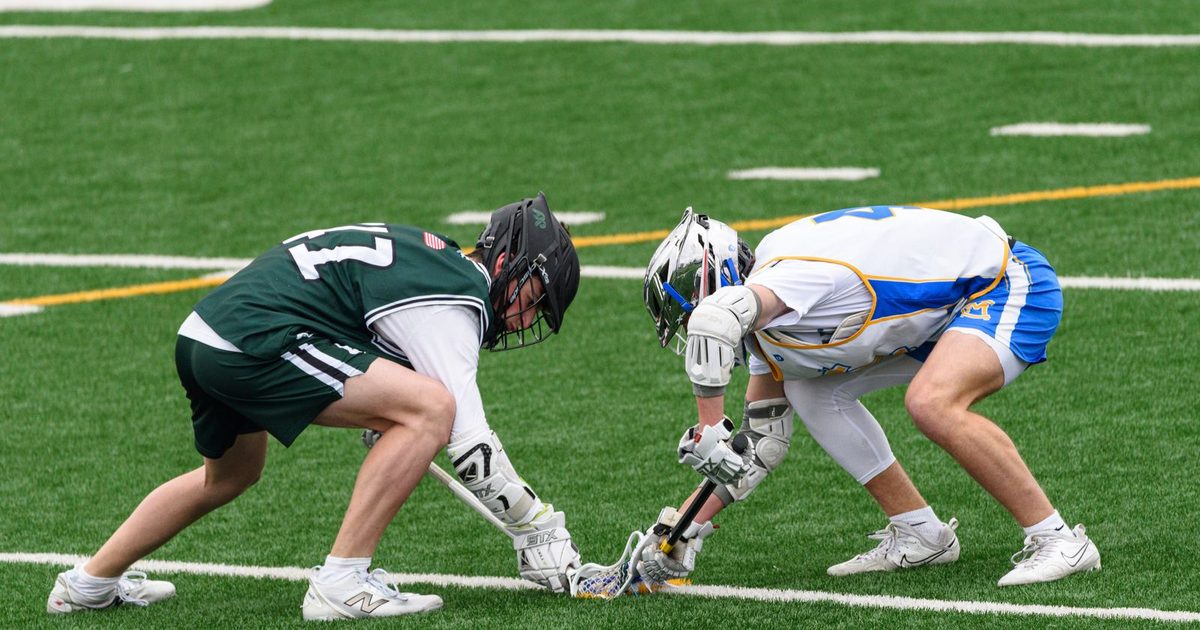
Play starts with a draw. Two opponents place sticks together at center with the ball held between the pockets above the ground. On the whistle, both players move their sticks upward and outward to launch the ball so it can be collected by themselves or by teammates positioned around the circle.
After possession is won, the team with the ball attacks. Players may run with the ball while cradling, pass to teammates, and shoot. If the ball goes out of bounds, possession usually goes to the player or team closest to the ball when it crossed the line, with specific exceptions after a shot. If a shot misses and goes out, the closest player to the ball where it went out often earns possession, which is why attackers chase their own missed shots and defenders learn to box out near the end line.
Checking Rules: Controlled and Limited
Checking in girls lacrosse means using the stick to dislodge the ball from an opponent stick. A legal check is short, controlled, and directed to the head of the opponent stick, away from the body. The stick must not come dangerously close to the opponent head, and wild swinging is always a foul.
Officials watch for the sphere, an imaginary bubble around each player head. An opponent stick may not enter that sphere. Checks must also be below the shoulder in most youth interpretations and must never be directed toward the body. As players get older, modified checking at younger levels gives way to full checking within the same safety principles, but the standard never becomes the body contact seen in boys lacrosse.
For parents, the key distinction is intent and control. A quick tap that pops the ball loose is the skill being taught. A large swing, a check from behind, or contact to the head is a foul and often a card at higher levels.
Common Fouls Families Will Hear Called
Holding, pushing, and illegal body contact are fouls because the girls game limits physical play. Reaching across an opponent body with the stick, blocking without playing the ball, and charging into a set defender are also fouls.
Three seconds is a distinctive defensive rule near the goal. A defender may not remain inside the close defensive area in front of the goal for more than three seconds unless she is closely marking an attacker. This prevents defenders from simply packing the area in front of the goalie.
Shooting space is another distinctive protection. A defender may not stand in the free space between an attacker with the ball and the goal if that space is a clear shooting lane, unless she is marking that attacker closely. When shooting space is called, the attacker earns a favorable restart because a safe shot was taken away.
Offside and restraining line violations occur when too many players cross into the offensive or defensive area. The restraining lines divide the field so that a limited number of players from each team can be in the scoring area at once. This keeps the game balanced and prevents crowding. When a team violates the line, officials award possession or a restart to the other team.
Goal circle fouls include an attacker stepping into the crease or a defender other than the goalie handling the ball improperly inside the circle. Empty stick checks, where a player checks a stick that holds no ball, and illegal cradling against the body are smaller fouls that new players commit often while learning.
Restarts, Free Positions, and Cards
Many fouls result in a free position restart. The fouled player gets the ball at a set spot, opponents must move to the required distance, and play resumes on the whistle. Close fouls in the scoring area can lead to a free position shot with a cleared lane, which is one of the most exciting plays for spectators to learn.
More serious or repeated fouls can lead to cards, which can remove a player for a period and force her team to play short. Exact procedures vary by level, so listen to the official and the coach.
Youth Modifications to Know
Youth rules deliberately slow the introduction of checking, reduce field size, and sometimes use fewer players and shorter games. Mouthguard and goggle checks are strict. Coaches should explain the specific modifications for your age group at the start of the season. When a call confuses you, assume a youth modification may be in effect and ask the coach after the game. Understanding grows quickly, and within a few games most parents can follow possession, fouls, and restarts with confidence.
The Field Markings That Decide Calls
Parents follow fouls faster when they know four markings. The crease is the circle around the goal: attackers may not step inside it, and the goalie owns special rights there. The 8 meter arc fans out in front of the goal and frames the close scoring area where free position shots are set and where the three second rule applies. The 12 meter fan is the larger arc used for lesser fouls and restarts in the scoring area. The restraining lines, 30 yards from each goal line at the full level, cap how many players from each team may be inside the scoring area, seven plus the goalie at most, which is the offside rule parents hear about. The center circle hosts the draw and explains why players line up around it with such care.
Cards in Plain Language
Cards punish the fouls that endanger players or repeat after warnings. A green card is a warning level sanction for minor or delay type offenses in many rule sets. A yellow card removes the player for a timed period and her team plays short, and two yellows become a red in most codes. A red card ejects the player for the game and often carries a suspension into the next one. Exact card menus differ between youth, high school, and college rule sets, so the family takeaway is simpler: a card means the officials judged the play dangerous, repeated, or unsporting, and the team pays with player time. Players who learn controlled checking early almost never collect cards, because most carded fouls in the girls game are checks that started too big or landed too close to the head.
A Worked Restart: The Free Position Shot
An attacker is fouled inside the arc on a scoring play. The official places her at the nearest hash on the 8 meter arc with the ball, moves every other player at least 4 meters away, and clears the lane to the goal. On the whistle she may run, pass, or shoot directly. Defenders may not stand in her shooting space, and the goalie may not be screened by her own defenders standing in the lane. For a spectator, the free position is the clearest window into the girls rules philosophy: the foul took away a fair scoring chance, so the restart hands that chance back under protected conditions.
How to Ask About a Call Without Ruining a Game
Youth officials expect questions; they object to timing and tone. The working approach for parents is to note the situation, quarter, and the call as you understood it, then ask the coach after the game to explain it at the next practice. Coaches translate rulebook language into the modification your division actually uses, which is the answer a parent needs. Asking the official directly during play rarely helps, because the official is managing twenty three other people and a clock, and because many youth calls involve a local modification the official can explain only in a quiet moment. Families who adopt the note and ask later routine find that their rule knowledge compounds fast, and their player stops watching the sideline during whistles, which coaches quietly count as a win.
Score, Clock, and End of Game Situations for Parents
End of game confusion usually comes from the clock, not the fouls. Youth games often run a running clock, which means the final minutes reward the team that values possession and punishes rushed shots, because the clock will not stop to rescue a trailing team. At higher levels with a stopped clock, fouls and goals stop time and the trailing team can plan a comeback around set restarts. Overtime, where leagues use it, is usually sudden victory: the first goal ends the game, starting from a draw. A parent who confirms three facts from the league sheet in week one, period length, clock type, and the overtime rule, will understand every late game decision the coach makes for the rest of the season.
Frequently Asked Questions
Why can a defender not just stand in front of the goal?
Two rules stop it. The three second rule bars a defender from staying inside the close area in front of the goal for more than three seconds unless she is closely marking an attacker. The shooting space rule bars a defender from standing in the clear lane between a shooter and the goal unless she is marking that shooter. Together they keep the scoring area open and shots safe.
What is the sphere in girls lacrosse?
The sphere is the protected space imagined around a player head, roughly the area a stick may not enter. A check that brings the stick into an opponent sphere is a foul even when it touches only air, because the rule protects the head before contact happens. Coaches teach players to check the stick low and away for exactly this reason.
How is a girls lacrosse game restarted after a goal?
Play restarts with a draw at the center circle, the same restart that opens each period. The two draw players set the ball between their sticks and the circle players take position around the circle. Possession off the draw decides which team attacks first in the next sequence.
What happens when a shot goes out of bounds?
Possession usually goes to the player who was closest to the ball at the spot where it crossed the boundary when the shot was taken. That is why the nearest attacker sprints behind the goal on every shot and why defenders box out near the end line. The backup rule rewards the team that runs to the end line first.
Do youth girls play by the same checking rules as high school players?
No. Youth rules introduce checking in stages. The youngest divisions use modified checking or none, and the definition of a legal check widens as players age, while the safety core never changes: short, controlled, to the stick, away from the body and the head. Ask your league which checking stage your division uses this season.