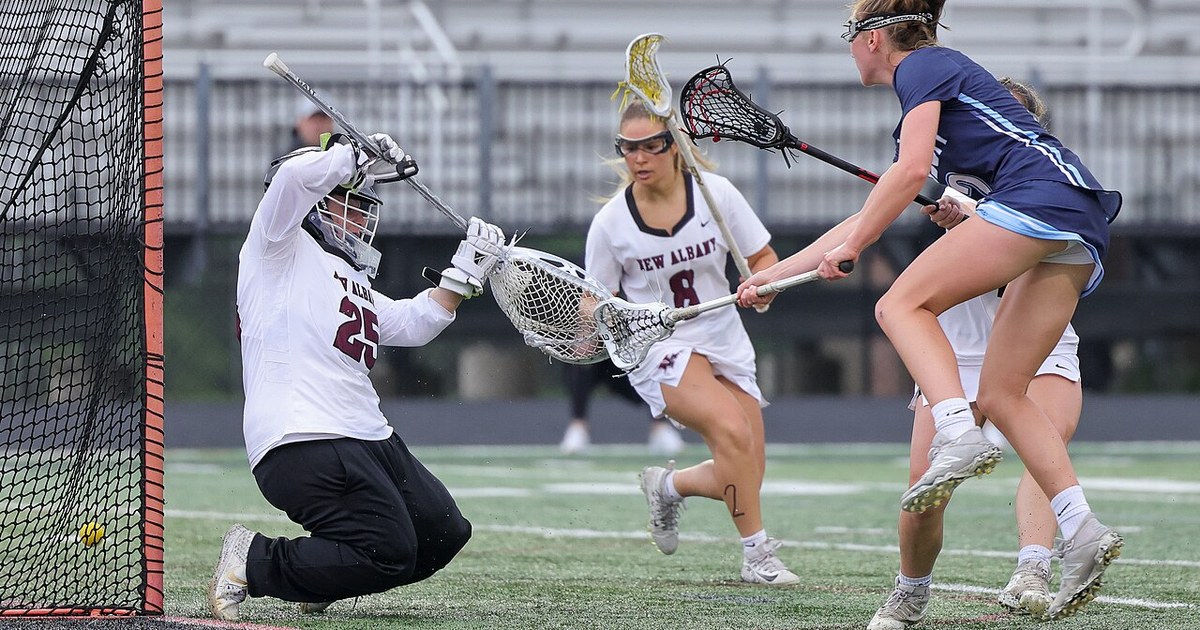
Photo: K.M. Klemencic / Wikimedia Commons
Start With the Awkward Fact: These Gloves Were Not Built for Warmth
In the girls game, field gloves are optional. Goalies must wear padded gloves; everyone else chooses. The gloves that exist for the girls field game are thin on purpose. There is no hand checking to protect against, so the glove's job is feel: a light palm, a little padding on the back of the hand, and nothing between the player and the stick that the rules do not require. Many players skip gloves entirely for exactly that reason, and play better bare-handed in May.
Then the season starts in February. A glove designed for feel in May is a poor answer to wind and freezing rain in preseason, and cold hands are not a comfort issue. Stiff fingers cradle late, catch hard, and shoot without touch. The fix is not a thicker lacrosse glove. It is a system, borrowed from how the leagues that play in real cold actually dress their players.
The Three Layers of a Warm Hand
| Layer | What it is | What it does |
|---|
| Liner | A thin ski liner glove, or a thin disposable-style glove, worn against the skin | Traps a still air layer and keeps skin dry; the warmth layer |
| Field glove | The regular girls lacrosse glove, sized to fit over the liner | Wind cover, grip surface, and the little padding the position needs |
| Grip check | A textured palm on the field glove, tested wet | Cold plus wet is where smooth palms let the shaft rotate |
The liner is the part players resist and the part that works. League guidance for cold regions says it plainly: thin rubber gloves worn under the lacrosse gloves keep hands dry and warm, and thin ski liner gloves do the same job. A lacrosse glove alone has no insulation to speak of; a lacrosse glove over a liner becomes a shell, and shells over liners are how every winter sport dresses hands. Size the field glove with the liner on. A glove that is snug bare-handed becomes a circulation problem over a liner, and restricted circulation makes hands colder, not warmer.
The Shaft Is Part of the Problem
Hands hold a metal tube for two hours. Aluminum alloy shafts are noticeably affected by temperature: they feel colder in low temperatures and pull heat from the palms through the glove, which is why experienced players tape the grip zones or choose gloves before they blame their circulation. Carbon composite shafts feel less cold to the hand than bare alloy. None of this requires buying anything exotic. It requires knowing that if your hands go numb in the first quarter, the shaft is a suspect alongside the gloves, and tape on the lower grip is a legitimate cold-weather move, not just a style choice.
The Pre-Game Cold Checklist
- Put liners on indoors, before hands get cold. Liners trap the warmth you have; they do not create warmth you lost in the parking lot.
- Fit check with the full system: liner plus glove, cradle and catch ten balls. If the shaft turns in your hands, the palm texture or the fit is wrong for wet cold.
- Keep a dry spare pair of liners in the bag. A wet liner at halftime is worse than none.
- Between shifts, gloves stay on and hands stay moving. Bare hands on a cold bench lose the whole system's work in minutes.
- After the game, dry gloves and liners fully in moving air before the bag closes. Damp gear starts the next cold day already cold.
When to Skip Gloves Anyway
Plenty of skilled players still play bare-handed in mild cold, because feel is a real performance value and the rules leave the choice open. The honest line is dexterity: when your fingers stop bending on command, you are no longer choosing feel, you are losing it. That is the moment the liner system earns its place. Warm hands with slightly muted feel beat numb hands with none.
Three Different Colds, Three Different Fixes
Cold is not one problem. Dry cold with wind is the liner problem: still air trapped against the skin does the work, and the field glove acts as the wind shell. Wet cold, the freezing rain that soaks a February scrimmage, is the dryness problem: once the liner is wet it stops insulating, which is why the spare dry pair in the bag matters more than any single product choice. Snow and frozen turf add a ground problem, because every ground ball puts hands near a frozen surface and every fall puts palms on it, so palm grip that works when wet becomes the deciding feature.
Reading the forecast for which cold you are getting is a genuine skill, and captains in cold regions do it without thinking. Dry and windy: standard liner system. Wet: spare liners, and a towel in the bag for the shaft grip zones. Frozen ground: check palm texture at warmups, because a smooth palm that was fine in October lets the shaft spin in January.
Warmth Between Shifts
Games are not continuous exposure; they are exposure interrupted by bench time, and benches are where warm hands are lost. A player who pulls her gloves off on the bench to fix her hair or check her phone gives back the whole system in a few minutes of wind. The convention on cold weather benches is simple: gloves stay on, hands stay in motion or tucked, and any adjustment that needs bare fingers happens indoors at halftime or not at all.
Substitution patterns help too. Short, frequent shifts in extreme cold are a coaching choice some programs make on purpose, trading continuity for hands that still work in the fourth quarter. If your program does not, the personal version is the same: the moment you come off, gloves stay on and hands go somewhere warm, because the next shift starts with whatever temperature your hands kept.
Young Players Feel Cold Faster
Youth players go quiet about cold hands in a way older players do not, partly because they assume numb fingers are normal and partly because they do not want to leave the game. The signs a parent or coach can see from the sideline are mechanical: a cradle that turns slow and careful, catches that start arriving with the stick held away from the body, ground balls approached with the top hand staying high instead of sliding low. Those are cold hand tells before they are effort problems.
The fix at youth level is the same system in smaller sizes, plus permission. Tell a young player plainly that saying her hands are numb is information, not complaint, and that a two minute warm up on the bench beats a half played with fingers that will not bend. Programs in cold regions build that permission into the first preseason meeting, and it costs them nothing.
When Cold Stops Being a Comfort Topic
There is a line past which cold hands are a safety matter, and players should know where it sits. Fingers that stay numb after several minutes indoors, skin that turns waxy or white and stays that way, or a player who cannot work her own glove straps are all stop and warm up signals, not toughness tests. The response is ordinary: come off, go somewhere warm, let feeling return fully before playing again, and tell the coach or trainer what happened.
Everything else on this page is about performance in ordinary winter weather, the cold that makes lacrosse harder without making it dangerous. Keep the two categories separate in your head. Ordinary cold gets the liner system and the checklist below. The stop signals get a warm room and no debate.
Hand Warmers: Useful, With Limits
Disposable hand warmers belong in this system at the edges, not at the center. Their honest place is the bench and the pregame: held inside the gloves while a player waits to go on, or carried in a uniform pocket during warmups so hands start the game warm. As a convention, most players take them out when they take the field. A warmer loose inside a field glove shifts during play, bunches under the palm, and changes the grip it was supposed to protect.
What warmers cannot do is rescue a bad system. If the liner is wet and the glove is sized tight over it, a warmer raises the temperature of a circulation problem for a while and then loses. Treat warmers as a supplement for bench time and for the coldest days, keep a few in the team bag, and let the layers do the real work. The checklist below folds warmer use into the full routine so it supports the system instead of substituting for it.
A pregame hand routine that actually works
Cold hands lose feeling fastest during the standing around before a game, not during play. A convention used by winter league coaches is a ten minute routine: two minutes of easy jogging, two minutes of stickwork at close range, then glove on passing in pairs, finishing with five hard shots per player. The order matters because blood flow arrives before the fine motor work starts. Players who go straight to shooting with numb fingers groove bad habits, pushing the ball instead of snapping the wrists.
A Cold Game Timeline: 38 Degrees at the Opening Draw
Plans beat intentions when the temperature drops, so here is a game day timeline a player can copy, built for a 38 degree start with a light wind.
Ninety minutes out, indoors: eat, dress in layers, and put liner gloves on before leaving the house, so hands never meet cold air bare. Sixty minutes out, arrival: keep the liners on through the team talk and the walk to the field; this is the stretch where most hands are lost, standing still in the cold while doing nothing. Forty minutes out, warm up: field gloves go over the liners for the first throwing drills, and the player grades her grip honestly on the ten catch test from the checklist above. If the shaft spins, the tape or grip change happens now, not at halftime.
Ten minutes out: hand warmers go into the bench coat pockets, one pair per half, and a spare dry liner pair goes into the same coat. During play: gloves stay on at the bench, hands stay inside the coat or under the arms between shifts, and any player whose fingers go white or clumsy says so early, because cold hands that lose feeling are a safety item, not a toughness contest. Halftime: swap to the dry liners, warmers move to the fresh pockets, wet liners go into the bag to be dried at home. After the game: gloves and liners dry in moving air the same evening, because a damp system carried into the next cold practice starts the whole problem over.
Frequently Asked Questions
Do girls lacrosse players have to wear gloves?
No, not for field players. Gloves are optional at every level of the girls and womens field game. Goalies are the exception: they must wear padded gloves as part of the goalie equipment set.
What do girls wear on their hands for lacrosse in winter?
A system, not a single glove: a thin liner glove against the skin, the regular field glove over it as a wind shell, and a textured palm so the shaft does not rotate in cold, wet conditions. Thick winter gloves off the shelf are too bulky to cradle or catch in.
Why do my hands go numb even with gloves on?
Usually fit and metal. A glove sized snug over bare skin restricts circulation once a liner is added, and a bare alloy shaft pulls heat through the palm all game. Size the glove over the liner, and tape the grip zone or use a composite shaft if numbness follows you every cold game.
Can I wear regular winter gloves to play?
Almost never well. Shelf winter gloves are built thick for warmth, and the thickness that warms a spectator prevents the finger movement catching and cradling need. They also lack a grip palm matched to a shaft. The liner plus field glove system exists precisely because one thick glove fails at both jobs, while two thin layers split the jobs and do each one properly.
Should the goalie use the same cold weather system?
No. Goalie gloves are required, heavily padded equipment with reinforced thumbs, and they are not sized to take a liner the way a field glove can be. Goalies warm their hands differently: hand warmers in the glove during bench time where the local rules and the officials allow it, and constant movement in the crease. Field players should not borrow the goalie approach, and goalies should not borrow the liner system without checking the fit of a required safety item.