The Fact Most Roundups Skip: Gloves Are Optional
For girls field players, gloves are optional equipment at every level of the game. They are not required, they are not checked by officials, and a player cannot be kept off the field for playing bare handed. That single fact separates the girls game from the boys game, where padded gloves are required equipment, and it changes the buying question completely. The question is not which gloves to buy. It is whether to buy them at all.
Product roundups rarely lead with this, because optional gear is harder to sell than essential gear. They describe girls gloves with the language of the boys game: heavy padding, check protection, essential safety. The girls game does not allow the stick checking to the hands that makes heavy padding necessary in the boys game. Girls gloves are close fitting and lightly padded, and they exist for comfort and small protections, not armor. The one exception on a girls field is the goalie, whose gloves are required and heavily padded with extra thumb protection. That is goalie equipment, covered in the goalie guides on this site, and it is not what this page is about.
Who Should Wear Them, and Who Should Skip Them
| Player situation | Wear gloves? | Why |
|---|
| Plays in cold early season or late fall weather | Yes | Warmth is the most common real reason; cold hands lose stick feel faster than gloved hands do |
| Hands sting from stick contact in drills, or a past hand or finger injury | Yes | Light padding takes the edge off incidental contact |
| New player still learning to cradle and catch | Usually skip | Bare hands give the clearest feedback while stick skills form |
| Skilled player who prizes stick feel above all | Usually skip | Any layer between hand and shaft dulls feel slightly, and many top players play bare handed by choice |
| Goalie | Required, but a different glove | Goalie gloves are a separate required item with heavy padding and thumb protection |
Notice what is not on the wear list: a rule, a coach preference presented as a rule, or a fear that bare hands are unsafe in the girls game. If a player is comfortable and her hands are warm, bare hands are a complete and legal choice.
How Girls Gloves Differ From Boys Gloves
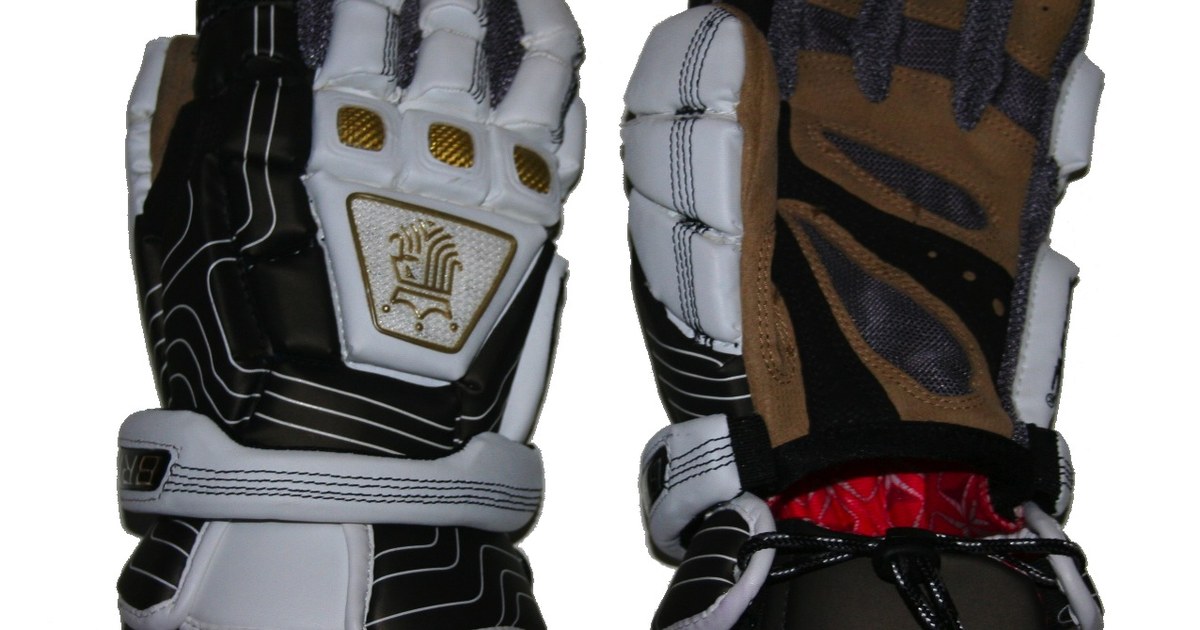
A boys glove is built to absorb repeated stick checks: thick padding over the back of the hand and fingers, a hard cuff, and sizing that runs from youth sizes up through large adult sizes. A girls glove is built to stay out of the way: thin padding, a close fit, flexible fingers, and often a grip treatment on the palm rather than armor on the back. Cold weather models add insulation and are closer to a winter glove with grip than to protective equipment.
This is why borrowing a brothers gloves is a poor substitute. Boys gloves in a small size are still bulky, and the bulk costs a girls player the stick feel the girls game rewards. If gloves are worn at all, they should be gloves made for the girls game.
The Fit Test
Fit decides whether gloves help or hurt, because a loose glove is worse than no glove.
- Fingers should reach near the end of the glove fingers without jamming. Extra length at the fingertips folds over the shaft and dulls every cradle.
- The glove should close around the hand snugly with the strap fastened, with no sliding when you shake your hand hard.
- Pick up a stick in the store. Cradle, switch hands, and mime a catch and a shot. If the stick feels like someone elses, the glove is too thick or too big, whatever the size chart says.
- Check the palm. A grip surface should help in damp weather, not stick so hard that hand switches slow down.
- For cold weather gloves, test on the coldest realistic setting you can: warmth that makes hands sweat in the first quarter makes them colder by the fourth.
Gloves by Position: Who Actually Reaches for Them
Position does not change the rule, since field gloves stay optional everywhere, but it changes the reasons players give. Midfielders, who run the most and handle the ball in transition at full speed, split both ways: some want nothing between hand and shaft at sprint speed, while others take the grip help in wet weather. Attackers who live on quick stick work near the goal tend to protect feel and play bare handed in mild weather. Defenders, whose sticks are checked less in the girls game than new players expect, usually cite warmth and little else.
The pattern underneath is weather plus habit. A player who starts a cold February with gloves often keeps them into April because the feel she trained is gloved feel. A player who starts bare handed usually stays that way until the first genuinely cold game. Neither path is a statement about toughness, and coaches who treat it as one are solving a problem the rule book does not have. The checklist below gives a player a way to make the call on evidence from her own hands instead of on habit or pressure.
What Gloves Cannot Do
Honest limits matter more than features here. Girls field gloves cannot protect against a hard stick check to the hand the way boys gloves are built to, because they do not carry that padding. A player who wears them expecting armor will be disappointed the first time incidental contact finds her fingers. They also cannot fix a cradle that is still developing. If the ball rattles out of the pocket, the cause is technique, and a glove only changes how the problem feels.
What they genuinely do is narrower and still worthwhile: take the sting out of small contact, keep grip consistent when palms sweat or rain starts, and hold warmth in cold weather. Judge any pair against those three jobs and the marketing language falls away on its own.
Where Gloves Sit in a First Season Budget
Families buying a first kit face a list where some items are required and some are not, and gloves belong firmly in the second group. The required money goes first: a legal stick, certified goggles with the SEI mark, and a molded mouthguard. Cleats follow, because footing affects every skill. Gloves come after all of that, and only for a reason a player can name: cold hands in an early season climate, sting from incidental contact, or a preference she has tested at practice.
That order matters because glove money spent in September is often wasted by March. Young hands grow, preferences settle, and the player who begged for gloves at registration may play bare handed all spring. Borrow a pair for a cold week, or buy late in the first season, and the purchase lands on evidence. Programs with loaner bins usually stock gloves for exactly this reason, and asking is normal.
Sizing Without a Standard
There is no single sizing standard across girls glove makers, which is why the size letter on one pair tells you little about another. Youth and adult labels overlap, and hand length matters more than age. The working method is measurement plus the fit test, in that order. Measure from the tip of the middle finger to the base of the palm, write the number down, and use each maker chart only as a starting point for which pairs to pick up.
Then ignore the chart and run the test from this page: fingers near the ends without jamming, no slide on a hard shake, and a stick in the hands for cradling and a hand switch. A pair that passes in the store passes in March. A pair bought by letter alone is a guess, and gloves are exactly the kind of optional purchase where a guess is easy to postpone.
The Culture Question, Answered Plainly
New families sometimes read a team photograph like a rule book: if most players wear gloves, they assume gloves are expected, and if nobody does, they assume gloves are frowned on. Both readings are wrong in the same way. Team glove use tracks the local weather and the age of the roster far more than any standard. A Minnesota program in March and a Florida program in March are solving different problems with the same rule book.
If a coach states a preference, treat it as a preference and ask the reason. Some coaches like a uniform look, some have watched a player lose a cold game to numb hands, and some simply repeat what their own coach said. A player who can explain her own choice, feel or warmth or grip, with a fit test behind it, has answered the culture question the right way regardless of what the photograph shows.
The wet weather grip test
Rain changes the glove decision more than cold does. A practical convention is the wet grip test: soak the ball, then have the player catch twenty firm passes and take ten shots. Padded gloves that feel secure in a dry store often turn slick once the palm material is saturated. If the stick twists on the catch or the top hand slides on the shot, that glove is a dry day option only. Many players keep the better gripping pair for wet games and treat the warmer padded pair as the cold and dry choice.
The Two Week Trial Protocol
Because gloves are optional, the honest way to decide is a trial with a written score, not a single practice and a feeling. Borrow a pair, or buy from a store with a real return window, and run the same four tests across two weeks of normal practices.
Test one, the catch count: have a partner fire 30 firm passes from 10 yards. Count clean catches bare handed on day one, then gloved on day two, same partner, same distance. Test two, the switch count: cradle at a jog and switch hands on every third stride for one field length; count drops each way. Test three, the shot feel test: take 10 shots at a corner target and score how many finish within a stick length of the aim point, gloved and bare. Test four, the comfort log: after each session, write one line on warmth, sting, and whether you noticed the gloves at all after ten minutes.
Score the trial plainly. If the gloved numbers match the bare numbers and the comfort log shows warmer or happier hands, the gloves have earned their place. If the catch count drops by more than three, or the log keeps mentioning the gloves after the first week, they are costing skill to buy comfort you may not need. The protocol takes no extra practice time, because every test fits inside drills the team already runs, and it replaces the two worst decision tools in youth sports: the loudest opinion on the sideline and the prettiest product photo.
Frequently Asked Questions
Are gloves required in girls lacrosse?
No. For field players, gloves are optional at every level. The required items are a legal stick, certified goggles, and a mouthguard. Only the goalie must wear gloves, and hers are a different, heavily padded item.
Why do some girls wear gloves and others not?
Mostly weather and preference. Players wear them for warmth, for light padding against incidental stick contact, and for grip in wet conditions. Players skip them for maximum stick feel. Both choices are normal at every level of the girls game, including the highest.
Can a girls player wear boys lacrosse gloves?
She can in most settings, since gloves are optional and unregulated for field players, but it is rarely a good idea. Boys gloves are bulky check armor, and the bulk interferes with the close stick work the girls game is built on. A girls glove, or no glove, serves her better.
Do gloves affect how a player catches and throws?
Slightly, and mostly at first. Any layer between hand and shaft softens the feedback a player uses to judge pocket feel, and a new glove wearer usually needs a few practices before her catching touch returns. A thin, close fitting glove costs far less feel than a bulky one, which is why the fit test on this page matters more than the brand on the cuff.
How long do girls lacrosse gloves last?
There is no standard lifespan, because wear depends on how often they are worn and how they are dried. The honest check is condition: palms worn smooth lose their grip job, split seams end the padding job, and a glove that stays damp and sour between games was stored wrong, not worn out. Air them after every use and judge them by the three jobs above, not by the calendar.