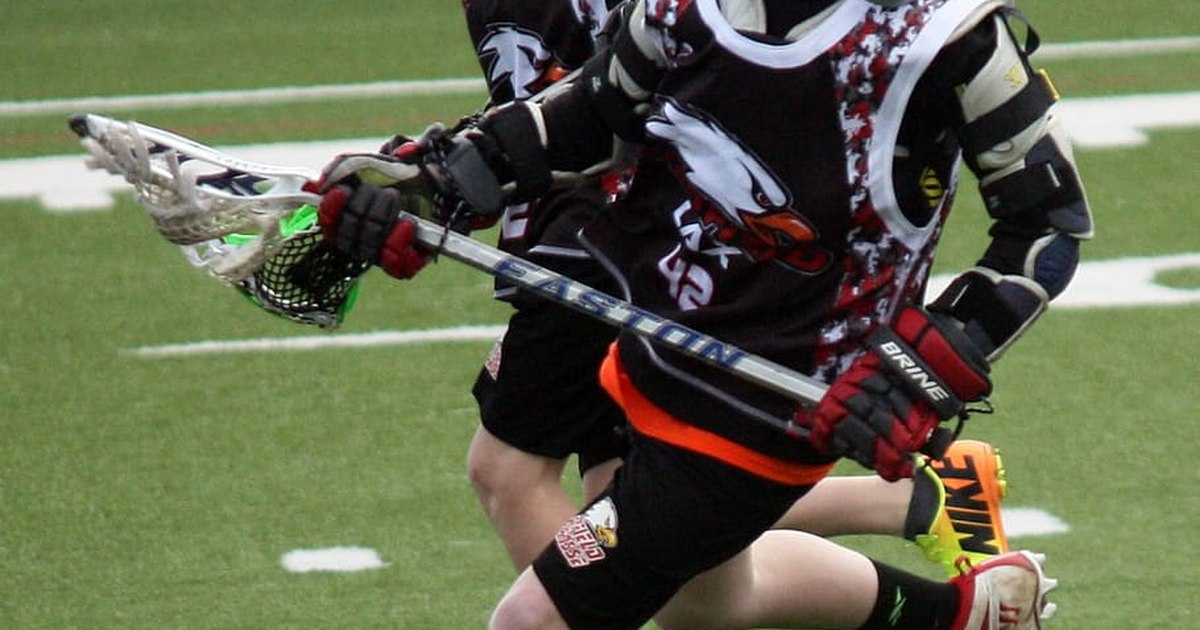
Running With a Stick Is a Skill, Not Just Fitness
Every lacrosse player runs with a stick for almost every second of every game, yet beginners are rarely taught the carry itself. They are taught to catch, throw, and scoop, then expected to connect those skills at a sprint while a defender closes in. This guide teaches the missing piece in order: how to carry the stick without the ball, how to cradle at three speeds, how to protect the ball with your body, how to switch hands while moving, and how to build all of it with a simple progression you can run in a yard.
The core picture never changes. The stick stays upright and close to the body, the head of the stick beside the shoulder or helmet, the ball settled in the pocket by motion rather than by grip strength. A stick carried flat, far from the body, or dangling in one hand at the hip is a stick asking to be checked.
The Carry Without the Ball
Without the ball, hold the stick vertically with your top hand near the throat and your bottom hand free to slide. Keep the head up beside your shoulder so you are ready to show a target the instant a teammate looks at you. Let your arms swing in a shortened version of your normal sprint motion. Choking the stick out in front of your chest like a rifle slows your stride and tires your shoulders within one shift.
Defenders carrying long poles run with the shaft angled slightly across the body, head high, so the pole does not catch the ground on cuts. Girls players carry in the same upright family of positions, with the stick close enough that a cradle starts without a regathering motion.
Cradling at Walk, Jog, and Sprint
Cradling is the small rocking motion, driven by the top wrist and forearm, that uses motion to hold the ball in the pocket against gravity and bumps. At a walk, cradle slowly and feel the ball settle after each rock. At a jog, the cradle quickens naturally with your stride. At a sprint, the cradle becomes compact: shorter rocks, stick tighter to the shoulder, and your free side ready to shield.
| Speed | Cradle size | Stick position | What to feel |
|---|
| Walk | Full, relaxed rocks | Upright, head beside shoulder | Ball settling after every motion |
| Jog | Medium, matched to stride | Upright, slightly tighter to body | No ball rattle, arms still swinging |
| Sprint in the open | Compact and quick | High and close, ready to pass | Ball secure while eyes stay upfield |
| Sprint in traffic | Compact, with body shield | Across the front, body between defender and stick | Contact hits your shoulder, not your stick |
Build speed in that order over days, not minutes. A player who can cradle at a walk but loses the ball at a jog does not need more sprint reps. She needs another hundred jog reps until the motion is boring.
Protecting the Ball With Your Body
In traffic, the rule is body first, stick second. Turn your non stick shoulder toward the defender, keep the stick on the far side of your body, and cradle in the protected space beside your far shoulder. Your free arm may stay close as a balance aid, but it may not push, hold, or ward off the defender; warding is a foul in both games. Protection comes from position, not from shoving.
When a check comes, absorb it and keep your feet moving. Most youth turnovers happen because the carrier stops, turns her back flat to the defender, and cradles in a stationary pocket that a second defender can reach. Keep moving through contact, switch hands if the pressure follows you, and pass out of trouble earlier than feels necessary.
Switching Hands Without Slowing Down
A one handed carry in your strong hand invites a defender to overplay that side. Switching hands at speed solves it. As you run, bring the stick across the front of your body at chest height, let the new top hand take the throat as the old top hand slides down, and settle the stick beside the other shoulder in one stride or two. Practice the switch at a walk in a straight line, then at a jog around cones, then in the open field with a coach calling switch at random moments. The ball should never dip below chest height during the move, and your eyes should stay up, because a switch you must watch is a switch you cannot use in a game.
The Yard Progression: Four Sessions
Session one is ten minutes of walk cradling, both hands, figure eights around any two markers. Session two is jog cradling in straight lines, twenty yards at a time, with a switch at every turn. Session three adds a shadow defender, a parent or teammate jogging beside you and reaching in with a pool noodle or a padded stick, while you shield and keep speed. Session four is full field carries: scoop a ground ball at one end, sprint the length of the yard or field, and finish with a pass to a target. Record dropped balls per session. When drops reach zero at one level twice in a row, the next level is earned.
Worked Example: The Midfielder Who Kept Getting Stripped
A 12U midfielder lost the ball on the same play three games running: she caught an outlet pass, turned upfield with the stick flat across her waist, and a riding attacker knocked it loose from behind. The fix was mechanical, not motivational. Her coach moved the stick upright beside her shoulder, shortened her cradle, and drilled the body shield with her left shoulder turned toward pressure. Two weeks of the yard progression later she carried through the same ride and delivered the pass. Nothing about her speed changed. Everything about her carry did.
Running Mechanics: What Sprint Coaches Would Fix First
Lacrosse players slow themselves down with their arms more than their legs. A stick carried across the chest locks the shoulders and shortens the stride on the stick side. A stick pumped up and down wastes vertical energy a sprinter would spend going forward. The corrections are small: keep the stick high and still relative to your shoulder, let your free arm swing normally, and keep your elbows soft so your stride stays symmetrical. Film yourself from the front for ten strides. If your head bobs toward the stick side or your free arm barely moves, the carry is taxing your speed.
Breathing and vision matter at speed too. A carrier staring at her own pocket is running blind into the next defender. Train the head up habit in every drill by placing the next instruction, a cone color, a coach hand signal, a passing target, where only a player looking upfield can see it.
Carrying on Wet, Muddy, and Turf Surfaces
Footing changes the carry. On wet grass, strides shorten and cuts get wider, so the cradle must tighten because every slip jolts the pocket. On mud, the ball picks up weight and grit; expect to cradle more firmly and to clean the pocket at stoppages. On turf, falls are harder and checks arrive at full speed more often, so the body shield matters earlier. None of this changes the fundamentals. It changes the margins, and players who practice carries on their actual home surface own those margins.
The Clear and the Ride: Carrying With a Job to Do
Most long carries happen on clears and rides, not on dodges. A clearing midfielder carries to draw a rider, then moves the ball before the second defender arrives. A riding attacker carries only when the clear has broken down, and her job is to slow the ball, not to win a one against three. In both cases the carry has a planned ending: a pass lane identified before the sprint starts. Teach carriers to name their outlet out loud in practice, left defender, top midfielder, far attack, until scanning before sprinting becomes automatic.
Carrying With a Long Pole and With a Goalie Stick
Defenders run with up to six feet of stick, and the carry adapts: the shaft rides at a slight diagonal, the head stays high and in front of the shoulder, and the bottom hand becomes the steering hand on cuts so the pole does not trail across a teammates lane. Long pole carriers must also plan their turns earlier, because the pole sweeps a wide arc that can catch a post, a referee, or an opponent in a way that draws a whistle. Practice wide turns around cones with the pole until the spatial habit is automatic.
Goalies carrying out of the crease on a clear use the opposite adjustment: the wide head stays in front of the body like a shield, both hands set for an immediate pass, and the run is usually short, to space and vision rather than to midfield. A goalie who practices the first ten yards of the carry, head up, stick protected, pass ready, will rarely need the eleventh yard.
Common Carry Mistakes by Age
Young players carry low and flat, watch the ball, and stop when pressure arrives. The fixes are the upright stick, the eyes up cue, and keep moving games like Sharks and Minnows. Middle school players add speed before control and lose the ball on their own strides; the fix is the speed ladder in this guide, honestly climbed. High school players usually carry well in the open and poorly in the last three seconds before contact, crowding their own cradle as a defender closes. The fix is earlier decisions: pass, switch, or shield a full step before the check arrives, rehearsed with a live closing defender in practice.
Frequently Asked Questions
Should you run with the lacrosse stick in one hand or two?
Carry with both hands on the stick in traffic and when preparing to pass or shoot. A one handed carry works in the open field for balance and speed, with the stick upright and close, but it exposes the ball if a defender arrives unexpectedly.
Why does the ball fall out when I run fast?
Usually the cradle is too slow or too flat for your speed, so each stride bounces the ball against the sidewalls until it pops out. Make the cradle quicker and smaller, hold the stick more upright, and build speed gradually through the walk, jog, sprint order.
How do you protect your stick from checks while running?
Put your body between the defender and the stick, keep the stick on your far shoulder, cradle compactly, and keep your feet moving through contact. Do not use your free arm to push the defender away, because warding off is a foul.
When should you switch hands while running?
Switch when a defender overplays your stick side, when you need to shield on the other shoulder, or when the passing lane opens to your other hand. A clean switch at chest height, finished within two strides, keeps your speed and your options.
Do girls and boys players carry the stick differently?
The fundamentals are the same: upright, close, compact cradle at speed. The difference is the pocket. A girls shallow pocket demands a more constant cradle and tighter carry, because the ball sits higher and is easier to dislodge.