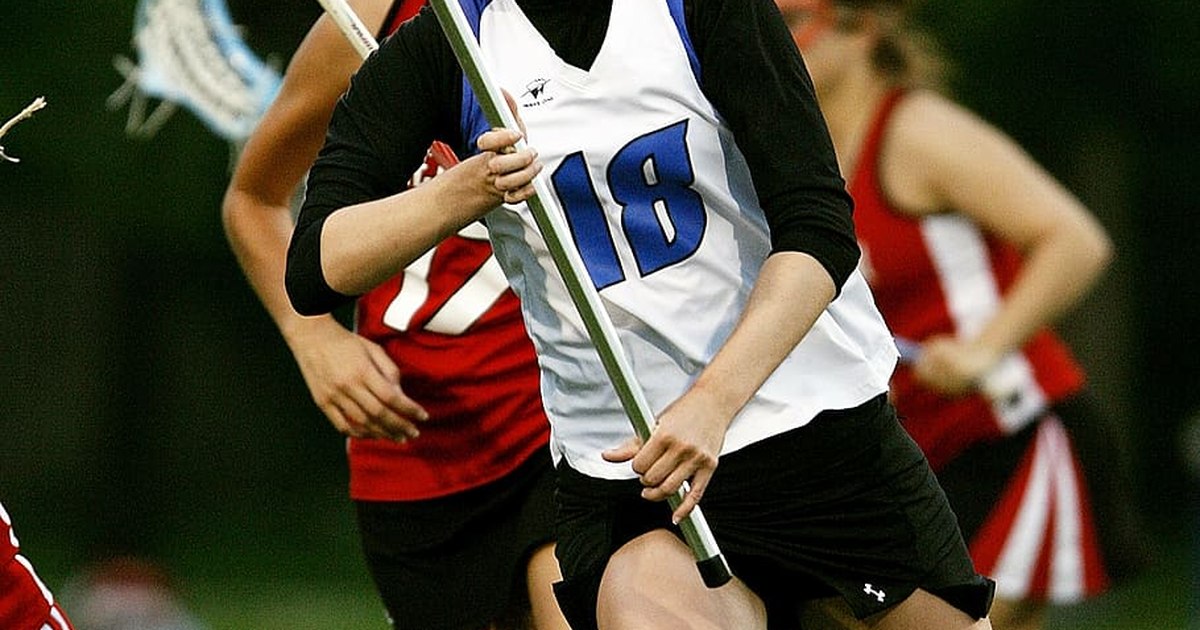
High School Drills Must Reproduce Game Speed Decisions
By high school, every player owns the basic techniques. What separates varsity players is decision speed: the outlet chosen before the save lands, the slide recognized a pass early, the extra pass made while a defender is still turning. High school lacrosse drills therefore work at full speed with live consequences, small numbers, and constraints that force the exact decisions games demand. This page lays out the drill families that build a high school program: transition, settled offense and defense, clearing and riding, special teams, and the practice plan that holds them together across a week.
Both games are covered. Girls high school programs adapt the same structures to the draw, the arc rules, and card consequences, while boys programs add faceoff units and timed penalty special teams. The templates below note the adaptation where it changes the drill.
Transition Drills: Where High School Games Swing
Drill: 3 against 2 continuous. Lines at midfield feed a new break every twenty seconds, attackers must shoot or turn it over within ten seconds, and defenders score a point for a stop that ends in a controlled clear. Drill: 4 against 3 ground ball breaks. The coach rolls a loose ball at midfield, the scoop winner attacks with numbers, and the drill punishes any first pass that goes backward. Drill: full field clear to break. A save starts a clear, the clearing team pushes immediately into a break if numbers allow, and the riding team sprints back into a defensive shell. That single drill rehearses the most valuable sequence in the sport: save, clear, break, finish.
Coaching standard for all three: the ball moves by pass faster than any player can run, and the first look is always upfield. Transition drills that allow long solo carries teach the opposite of their purpose.
Settled Play Drills: 6 Against 6 With a Constraint
| Constraint | What it forces | When to use it |
|---|
| Shot only after three passes | Ball movement and off ball cutting | Against zone defenses or ball watching units |
| Offense scores double from the crease | Feeding and inside finishing | When outside shots dominate and stall |
| Defense scores for a caused turnover | Active, legal pressure | When the shell is passive and late |
| Two possessions, then switch | Urgency and communication | Late game and clock situations |
| Scout look of the week | Recognition of the next opponent | Thursday and Friday practices |
Run settled work in short, scored segments of six to eight minutes. Keep a visible score. High school players compete honestly when the drill keeps score and the losing unit runs the reset, not laps, so the consequence stays inside the game.
Clearing and Riding: The Hidden Third of the Game
Drill: live clear against a full ride, starting from a save, with the clearing team needing the ball over midfield in the time their rules allow, ten seconds to advance in the boys game under the standard count structure used at this level, and the riding team scoring for any turnover it creates. Rotate goalies and first midfield lines through the hot seats. Drill: ride recovery sprints, where the attack unit practices the first three steps after a lost possession, because rides fail at the moment of the turnover, not at midfield. Track team clearing percentage across the week the way you track shooting. Programs that count clears get good at them.
Special Teams and Restarts
Boys programs drill extra man offense and man down defense as their own units, with timed segments that match penalty lengths, thirty seconds for technicals and one to three minutes for personals, rehearsed at the short end so the unit learns urgency. Girls programs drill free position execution and defense, draw units with called targets, and card situations, playing six against seven in field players terms so the short handed rotations are automatic in games. Faceoff and draw specialists get their own ten minute block with wings and circle players, because restarts practiced as an afterthought are restarts lost on Saturdays.
The High School Practice Week
Monday is correction day: film first, then drills aimed at Saturdays biggest failure, at three quarter speed with heavy teaching. Tuesday is the heaviest live day: transition and settled work at full speed. Wednesday is scheme day: the opponents scout looks installed in constrained 6 against 6. Thursday is sharp and shorter: special teams, restarts, and walk through polish. Friday is activation: short, fast, confident reps and set plays only. This rhythm protects legs, gives every drill family its day, and means no player wonders what practice is for when she or he arrives.
Conditioning Without Wasting Practice
High school conditioning belongs inside drills: continuous breaks, full field clears, and small sided games with short rests build game fitness while teaching. Separate sprint work has a preseason place, but in season, a team that conditions inside its drills gets fitter and better at lacrosse in the same minutes, while a team running laps after practice gets fitter and no better at all. Protect one full rest day in every seven during the season, and treat sleep and school load as real constraints on real teenagers, not as excuses.
Position Specific Add Ons for the Last Twenty Minutes
Attack units use the final block for feed and finish timing with the actual feeder and crease pair who will play together Saturday, because chemistry between specific players is a real and trainable thing. Midfield units drill two way responsibilities: the same players who push the break must be the first three back, and any drill that lets offensive midfielders jog back teaches a habit opponents will cash in. Defensive units polish matchups against the scout look, with the goalie calling the slide package by name until the call and the rotation are one motion.
Faceoff and draw units close practice with live reps at game intensity but low volume, ten to fifteen maximum, because restart technique degrades sharply with tired hands and the last reps of a long session teach exactly the sloppiness games punish.
Tryout and Preseason Versions of These Drills
In tryouts, the same drill families become evaluation tools when coaches score them simply: transition drills reveal speed of decision, constrained settled work reveals who moves without the ball, and clearing under pressure reveals composure. Tell players the scoring in advance. A tryout that measures hidden qualities selects for the lucky; a tryout that names its standards selects for the prepared and teaches everyone what the program values.
Preseason shifts the balance toward volume and teaching: longer position blocks, more three quarter speed installation, and conditioning built aggressively. In season shifts toward sharpness and health. The drills do not change identity across that shift. Their dosage does, and managing dosage is most of what a good high school practice plan actually is.
Film Driven Drills: Closing the Loop on Saturday
The most efficient high school drill is the one built from Saturdays film. Pick the two situations your team lost most often, a failed clear against a particular ride, a crease feed your defense kept conceding, and rebuild them as drills with the same personnel and the same field spots. Run them Tuesday at full speed. By Thursday the scout block feels familiar rather than new, because the team has already solved its own version of the problem. Programs that close this loop weekly improve during the season. Programs that run a fixed drill menu regardless of film mostly improve at the drills.
Keep the film clips short and specific when you show them. Three clips of one failure teach more than a forty minute film session, and they let practice start on time with the lesson already in every players head.
Small Rosters and Combined Programs
Many high school programs dress sixteen to twenty players, not thirty. Small rosters change drill math: 6 against 6 settled work consumes almost the whole team, so goalies and specialists must rotate through rather than rest, and conditioning must hide inside drills because there are no fresh legs to waste. Use 4 against 4 and 5 against 5 as your default live formats, borrow the other schools JV for scrimmage days where schedules allow, and protect your two way midfielders minutes across the week like a pitch count. A small roster coached honestly about its constraints will outplay a bigger roster that pretends depth it does not have.
Measuring a Drill Program Across a Season
Programs improve what they count, so count four things weekly: clearing percentage in live segments, ground balls won in transition drills, extra man or free position conversion in special teams work, and goals allowed in the first minute after a restart. Post the numbers where the team dresses. When a number stalls for two weeks, change the drill that owns it rather than raising your voice about it. High school athletes respond to a visible problem and a concrete plan far better than to general demands for intensity, and a coaching staff that tracks its own drills models exactly the accountability it asks from players.
The Friday Walk-Through Version
The day before a game, rerun the week's core drills at walking pace instead of canceling them. Keep the same field markings, the same groups, and the same verbal cues, but cap every rep at half speed and replace contact with a two-hand tag. Players talk through their reads out loud as the rep unfolds: the on-ball defender narrates his approach angle, the nearest slide defender names his trigger, and the backside players call out who they are responsible for. Twenty quiet minutes of this rehearsal fixes more assignment mistakes than another hard session, and it leaves legs fresh while reinforcing the exact pictures the team will see at game speed the next day.
Frequently Asked Questions
What drills do high school lacrosse teams run most?
Transition breaks, constrained 6 against 6 settled work, live clearing and riding, and special teams for extra man, man down, free positions, and restarts. Those four families cover the situations that decide high school games.
How long is a high school lacrosse practice?
Typically 90 to 120 minutes in preseason and 75 to 105 minutes in season, with the shorter in season sessions run at higher intensity. The weekly rhythm matters more than any single days length.
How do you make drills game speed without chaos?
Use small numbers, keep score, add one constraint, and keep segments short. Chaos comes from too many players, no score, and drills that run long past the point where technique breaks down.
Should high school teams practice clearing every day?
Clearing deserves time at least three days a week, because it is a third of the possession game and the easiest place to gain an edge. Even ten live minutes, tracked as a percentage, changes a teams season.
What is the difference between JV and varsity drill work?
The drill families are the same. JV work slows the speed, simplifies constraints to one at a time, and adds teaching reps. Varsity work layers constraints, scouts opponents, and expects decisions at full speed.