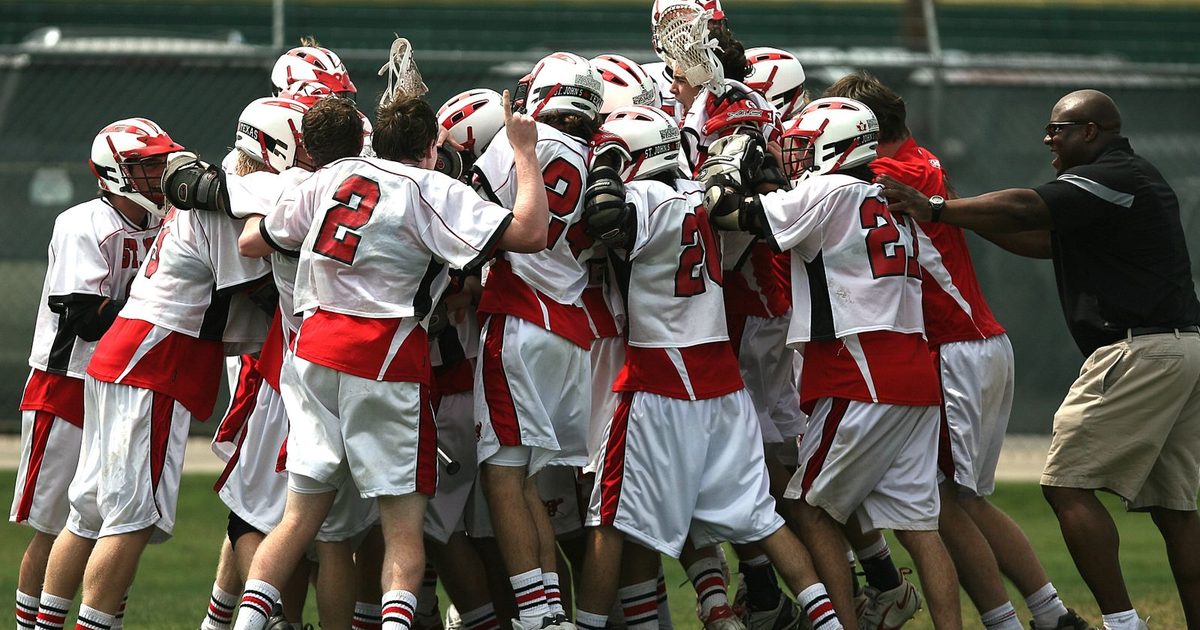
Equipment Every Player Needs
Every field player needs a stick suited to the game they play, a mouthguard, and cleats or turf shoes appropriate for the surface. A mouthguard is required in both games and must be worn during play. It protects the teeth and jaw and helps reduce the force of impacts. Choose a model the player will actually wear comfortably, and replace it when it becomes chewed or loose.
Cleats give traction for cutting and changing direction. Lacrosse specific cleats support the ankle area differently from soccer cleats for some players, but the most important factors are fit, comfort, and whether the league allows the stud type on its fields. Never wear metal spikes unless the league clearly permits them.
Boys Required Protective Gear
Boys lacrosse allows more body contact, so the required protective set is larger. A boys field player typically must wear a helmet, shoulder pads, arm pads, and gloves, along with a mouthguard.
The helmet protects the head and face with a hard shell and a metal face mask. It must fit snugly without wobbling and should be certified for lacrosse use. Shoulder pads protect the chest, shoulders, and upper back. Modern youth shoulder pads must meet the current chest protection standard designed to reduce the risk of a rare but serious chest impact injury. Look for the proper certification label when you buy.
Arm pads cover the elbows and forearms against stick checks. Gloves protect the hands and wrists while still allowing the player to feel the shaft. Boys goalies add a throat guard attached to the helmet, chest protection built for the position, and often padded goalie pants or shin protection as allowed.
Many leagues also require or strongly recommend a protective cup for boys. Ask your coach directly, because expectations vary by age group.
Girls Required Protective Gear
Girls lacrosse limits body contact, so the required set is smaller but still essential. A girls field player typically must wear protective eyewear, often called goggles, and a mouthguard. Goggles protect the eyes and the area around them from sticks and balls. They must fit close to the face without blocking vision, and they must meet the current safety standard for the level of play.
Girls gloves are usually thinner and more flexible than boys gloves. In many youth leagues they are optional for field players, while in colder weather they help with grip and comfort. Some players add soft headgear where allowed, but headgear does not replace goggles and is not required in most leagues. Confirm what your league allows before buying.
Girls goalies wear much more protection: a helmet with a throat guard, chest pads, goalie gloves, and leg pads. A goalie faces direct shots, so every piece must fit correctly and be in good condition.
What Each Piece Actually Does
It helps to think in terms of risks. The helmet and goggles address head and eye risks. Shoulder and chest pads address body impact and ball impact. Arm pads and gloves address stick checks to the arms and hands. A mouthguard addresses dental and jaw risks. Cleats address slipping and ankle stress during cuts.
When a piece is missing, the risk it covers does not disappear. That is why officials check equipment before games and why coaches should never let a player borrow an ill fitting helmet or skip a mouthguard at practice.
Optional and Helpful Extras
Several items are not required but make the season easier. A gear bag keeps everything together and makes it less likely that a mouthguard or glove is left at home. A second mouthguard as a backup saves a game day scramble. A water bottle, sunscreen, and a small towel are simple but essential for long practices and tournaments.
Players also benefit from a practice ball or two at home for wall ball, a stick repair kit with tape and string, and weather layers for cold or rainy days. Girls players may add hair ties that keep hair clear of goggle straps. Boys players may add rib pads for extra torso protection where allowed.
Fit Matters More Than Brand
Protective gear only works when it fits. A helmet that slides around, shoulder pads that ride up, or goggles that slip down the nose will distract the player and reduce protection. Fit each piece while the player wears practice clothing, and have the player run, turn, and cradle in the store or at home before removing tags when possible.
For growing youth players, check fit again midseason. Growth spurts change helmet and pad fit quickly. Hand me down gear can save money, but never use a helmet with cracks, missing padding, or an unknown crash history.
A Simple Shopping Order
Start with the required items for your player game and position, fit them in person when you can, and then add the extras. Buy the stick after you know the position, or start with a versatile field stick for a beginner. Keep receipts and a list of sizes in your phone. With the required set covered and fitting well, a new player can focus on learning skills instead of adjusting uncomfortable gear.
The Full Equipment Table by Game and Position
The table below compiles required and common optional equipment from the USA Lacrosse Equipment Guide for the 2026 seasons. League sheets can add requirements, so treat this as the national baseline and confirm local additions at the parent meeting.
| Item | Boys field player | Boys goalie | Girls field player | Girls goalie |
|---|
| Stick | Required, position length rules | Required, 40 to 72 inches | Required, 35.5 to 43.25 inches | Required, 35.5 to 52 inches |
| Helmet | Required, certified for lacrosse | Required, with throat guard | Not worn; ASTM eyewear instead | Required, with throat guard |
| Eye protection | Inside helmet mask | Inside helmet mask | Required, ASTM standard with SEI mark | Inside helmet mask |
| Mouthguard | Required | Required | Required | Required |
| Chest protection | Shoulder pads with ND200 mark | Goalie chest protector with ND200 mark | Not required | Required goalie chest pad |
| Gloves | Required | Required, goalie model | Optional in most leagues | Required, goalie model |
| Arm pads | Required | Usually worn | Not worn | Usually worn |
| Leg protection | Not standard | Optional padded pants or shin guards | Not worn | Common, as league allows |
| Protective cup | Required or strongly recommended in many leagues | Recommended | Not applicable | Not applicable |
| Cleats | Required in practice | Required in practice | Required in practice | Required in practice |
Reading the table by column prevents the two most common shopping errors: buying a boys helmet for a girls field player, who needs certified eyewear instead, and sending a goalie out in field player chest protection, which is not built or certified for stopping shots.
Certification Marks Worth Checking on the Shelf
Two marks decide most equipment arguments. Shoulder pads and goalie chest protectors in the boys and girls games must meet the NOCSAE ND200 standard, the commotio cordis chest protection standard, and the product should carry that marking on the pad or its tag. Girls eyewear and optional girls headgear must meet the current ASTM standard for the game, and certified products carry an SEI mark showing independent testing. A product without the relevant mark may look identical on the shelf and still be illegal for league play, which is why the mark check belongs in the store and not at the field gate.
Helmets follow the same logic. A lacrosse helmet is certified as a complete unit of shell, padding, and mask. Swapping in a mask or padding from another sport voids that logic, and a helmet with an unknown crash history should be retired rather than handed down.
A Worked First Season Kit Plan
A family buying for a first year boys 10U field player needs seven purchases before the first practice: a legal 37 to 42 inch complete stick, a certified helmet fitted to the head, ND200 marked shoulder pads, arm pads, gloves, a mouthguard plus a backup, and cleats matched to the home field surface. A first year girls 12U field player needs five: a legal girls complete stick, ASTM certified eyewear, a mouthguard plus a backup, cleats, and the gear bag that keeps the small items from vanishing. In both games the backup mouthguard is the cheapest insurance in the sport, and the bag is the purchase that protects every other purchase from being left in a garage.
How to Store Equipment Between Seasons
Off season storage decides whether next season starts with a working kit or a shopping trip. Wash and fully dry every soft item before it goes into a bin; stored moisture is what turns a sound set of pads into a smell that no wash fully removes. Store helmets and goggles unstacked, with nothing heavy resting on the mask or the eyewear frame. Hang or lay sticks so the head carries no weight, because a head that spends a winter under a bin warps into a pocket problem by spring. Keep the mouthguard case with the bag rather than in a bathroom drawer, and write the sizes of everything that will need replacing on a note inside the bag while the information is still obvious. Fifteen minutes of storage work in November saves a full weekend of emergency shopping in March.
Frequently Asked Questions
What equipment does a first time lacrosse player actually need?
Start with the required column for your game and position in the table above. A boys field player needs a stick, certified helmet, ND200 shoulder pads, arm pads, gloves, mouthguard, and cleats. A girls field player needs a girls stick, ASTM certified eyewear, a mouthguard, and cleats. Everything beyond that list is an extra that can wait until after the first practices.
How can I tell if shoulder pads meet the current standard?
Look for the NOCSAE ND200 marking on the pad itself or on its attached tag. USA Lacrosse requires boys shoulder pads and goalie chest protectors to meet ND200, the standard written to reduce the risk of commotio cordis from a chest impact. Pads made before the standard took effect may not carry the mark and may not be legal for league play.
Can my daughter wear a helmet instead of goggles in the girls game?
No. Girls field players wear ASTM certified eyewear, and a boys helmet is not a legal substitute. The girls game is built around limited contact and certified eye protection. Optional soft headgear exists for the girls game, but it must also carry the ASTM mark and it never replaces the required eyewear.
Which pieces of used equipment are safe to buy secondhand?
Bags, cleats in good condition, gloves, and arm pads are reasonable secondhand buys after a careful inspection. Be far more cautious with helmets and chest protection: never use a helmet with cracks, compressed padding, or an unknown crash history, and confirm any used chest pad still carries its ND200 marking and fits the player correctly.
Why does the goalie wear different chest protection from field players?
A goalie faces direct shots at close range, so goalie chest protectors are built and certified to absorb ball impacts across the sternum and ribs. Field player shoulder pads protect against stick checks and body contact and are shaped for running and cradling. The two products solve different problems, and officials can remove a goalie whose chest protection is a field pad.