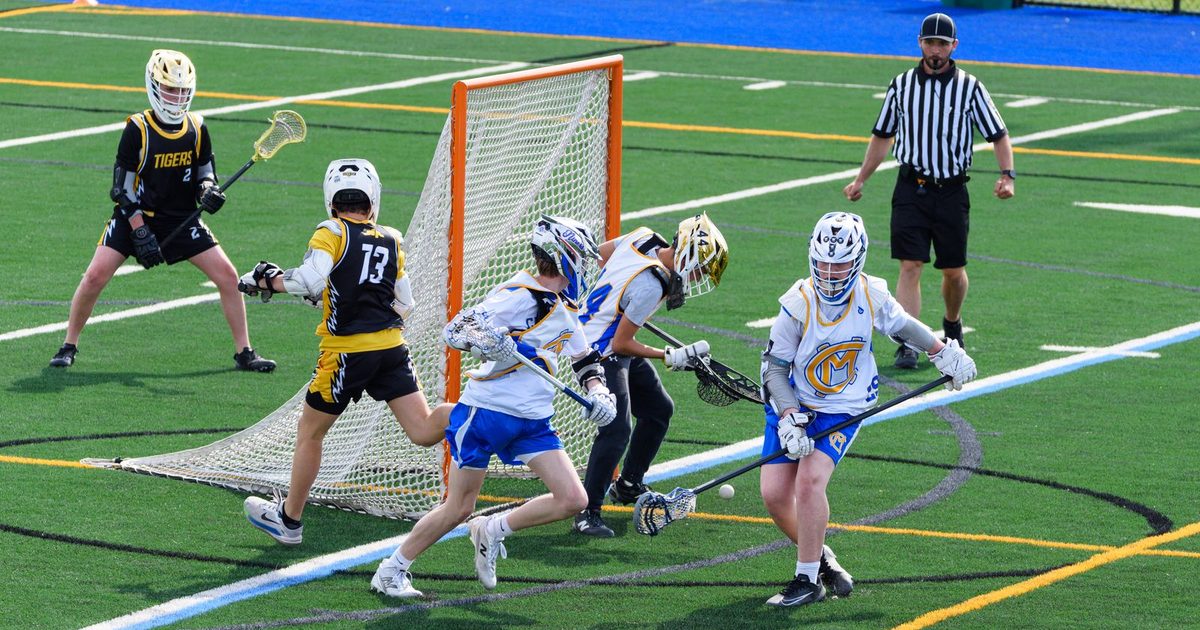
Why Youth Sticks Exist
Young players are not small high school players. Their hands are smaller, their coordination is still developing, and their confidence rises or falls with every catch. A youth lacrosse stick is designed to make early success more likely: lighter weight, a shorter and easier to control shaft, and a head and pocket that forgive imperfect technique.
Using an adult stick too early usually slows learning. The head feels heavy, the shaft is hard to maneuver in tight spaces, and the player compensates with habits that a coach later has to undo. A proper youth stick lets the player focus on fundamentals.
Sizing by Height First, Age Second
Age groups are a useful starting point, but height and strength vary widely within any age group. Use age to narrow the options, then fit by height and handling.
A practical fitting method is to stand the complete stick upright next to the player with the scoop resting on the ground. For the youngest beginners, the top of the stick should reach roughly between the belly button and the chest. If it reaches the chin or higher, the stick will be awkward for cradling and scooping. For older youth players moving toward standard field play, a longer stick becomes appropriate, especially as they settle into a position.
Also test control directly. Ask the player to hold the stick with one hand a short distance below the head and lift the head up and down slowly. Then ask for ten easy cradles and five ground balls. A correctly sized stick looks manageable. A stick that is too big makes the head wobble and the bottom hand do all the work.
Sizing Guide by Age Group
For players in the earliest learn to play groups, choose the shortest and lightest youth complete sticks. The goal is joyful repetition: catching a soft toss, scooping, and running with the ball without fatigue.
For elementary age players with one or two seasons of experience, a youth stick with a slightly larger head and a more defined pocket works well. Many players in this range still benefit from a cut down shaft fitted by a coach or retailer.
For middle school players, transition depends on position and physical maturity. Field players often move to a standard length stick, while smaller players may stay on a fitted youth length a little longer. Goalies and defenders need position specific lengths, so make that change only with coach guidance.
Beginner Features That Actually Help
A wider head is the most helpful beginner feature. It enlarges the catching area and makes ground balls more forgiving. A flat scoop helps the head slide under the ball on grass without digging.
A factory strung pocket designed for beginners should hold the ball securely without being too deep for the rules of the game being played. For girls youth play, the pocket must stay shallow and legal. For boys youth play, a moderate pocket that releases smoothly is ideal. Avoid extreme stringing styles meant for advanced players.
Lightweight alloy shafts are a sensible default. They are durable for playground and practice use and keep the overall weight down. A simple grip texture can help small hands, especially in rain, but bulky added grips can make hand movement harder. Keep it simple.
Boys and Girls Youth Sticks Are Different
Buy for the game your child plays. A girls youth stick has a shallower pocket and a head designed for the girls rules. A boys youth stick allows a deeper pocket and is built to handle more contact in the boys game. They are not interchangeable for league play, and officials can remove an illegal stick.
If siblings play different versions of the game, label each stick clearly with tape and a name near the butt end. Mix ups at home are common and easy to prevent.
When to Move Up to the Next Stick
Move up when the current stick limits the player, not simply when a birthday arrives. Signs include the player catching cleanly with a narrow margin, cradling confidently at speed, and handling the stick easily with either hand. Another sign is positional: a player assigned to defense or goalie needs the correct specialty stick to do the job safely and effectively.
Also move up when the youth stick is physically too short, forcing the player to hunch over ground balls, or when the head has become too flexible or warped from use. A coach can confirm readiness in one practice by watching ball control under light pressure.
Keep the old stick as a backup or a wall ball stick if it is still legal and in good condition. A familiar backup is valuable when a pocket breaks before a game.
Saving Money Without Hurting Development
Buy a solid youth complete stick rather than the cheapest toy style stick. Toy sticks with very soft heads and loose pockets frustrate beginners and often need replacement within weeks. A real youth stick costs more at first but lasts the season and can be passed down.
Look for prior season colors of the same model, team purchase programs, and reputable used options for shafts and heads, but inspect any used pocket carefully and have it checked for legality. Never save money by using a cracked head or a damaged shaft.
The best value is a stick the player uses daily without complaint. Fit it by height, choose forgiving features, and let skills, not age alone, decide when to move up.
The Legal Length Table for Youth Sticks
Parents often ask for one simple number, but youth stick legality runs on ranges that change with age group and game. The table below compiles the USA Lacrosse youth rules and the USA Lacrosse Equipment Guide for the 2026 seasons. Measure the complete stick, head and butt end cap included, before judging any row.
| Game and age group | Complete stick range | What changes at this step |
|---|
| Boys 6U | No fixed inch range; stick capped at ground to waist height | Learning grip and scoop shape matter more than length |
| Boys 8U | 37 to 42 inches for every field player | Long poles are not permitted at this level |
| Boys 10U | 37 to 42 inches short sticks; 47 to 54 inches for the limited long poles | Defense length appears for the first time |
| Boys 12U and 14U | 40 to 42 inches short sticks; 52 to 72 inches long poles | Regulation adult ranges take over |
| Girls 10U and below | Smaller sticks allowed; 10U may use a modified pocket | No more than half the ball may sit below the sidewall in the modified pocket |
| Girls 12U and up | 35.5 to 43.25 inches for field players | Pocket must pass the flat test and the inverted test |
| Girls goalkeeper | 35.5 to 52 inches | Head may be up to 12 inches wide |
Two habits keep a family out of trouble with this table. First, remeasure after any shaft cut, because officials measure the finished stick and not the shaft on the store shelf. Second, recheck the pocket after the first month of play, since new strings stretch and a pocket that passed in March can sag by May.
A Fitting Session You Can Run at Home
A kitchen fitting takes ten minutes and answers most sizing questions better than a size chart. You need the complete stick, a tape measure, a ball, and a short hallway or driveway.
- Stand the stick upright beside the player with the scoop on the floor. Note where the top of the head reaches on the body and write it down with the date.
- Ask for twenty cradles at walking speed, ten with each hand on top. Count drops out loud together so the player hears the score improving across weeks.
- Roll out ten ground balls on grass. A player who has to bend double or stab down at the ball is telling you the stick is too short or too long for current strength.
- Finish with ten wall ball throws against a safe wall. Throws that sail high usually mean the pocket is too deep or the head is too heavy for the wrists, not that the player lacks effort.
Repeat the same four steps whenever a growth spurt arrives. Youth players can gain two inches of height in a single season, and a stick fitted in September can be wrong by April even though nothing about the stick changed.
Worked Example: Sizing a Nine Year Old
Consider a nine year old who is 52 inches tall and starting a first 10U season in the boys game. The legal short stick window is 37 to 42 inches. A stick at the top of that window reaches near the player chin and will feel head heavy during one handed cradling. A stick near 38 or 39 inches sits closer to chest height, keeps the head light enough to lift with one hand, and still leaves growing room inside the legal range. That is the coaching convention this site recommends for beginners: start near the low end of the legal window and move up only when control, not the calendar, asks for more length. The same logic in the girls game points a new 12U player toward the shorter half of the 35.5 to 43.25 inch window until her catching is clean at full running speed.
Youth Stick Care That Prevents Mid Season Failures
Youth sticks fail in predictable places. Pockets bag out when a stick spends the winter under a heavy bin or the summer in a hot trunk, so store it hanging or flat with nothing resting on the head. Heads crack at the throat when a stick is used as a lever to pry balls out of fences and goals, a habit worth correcting the first time it appears. Shafts dent when sticks are thrown into car trunks loose against hard edges, which is what the stick bag or a simple sleeve prevents. A monthly two minute check, pocket test, head squeeze for cracks, shaft roll on a flat surface to spot bends, keeps a youth stick legal and safe for the full season it was bought to serve.
Frequently Asked Questions
What size lacrosse stick should a 7 year old use?
At 6U and 8U the fit rule matters more than a single number. Boys 8U sticks run 37 to 42 inches complete, and the right pick sits near the low end of that range for most seven year olds. Stand the stick beside the player: if the head reaches the chin or higher, choose a shorter option or have a coach fit a cut shaft.
Can a youth player use an adult stick if it feels fine at home?
Feeling fine in a hallway is not the test officials apply. The complete stick must fall inside the legal range for the age group, and an adult short stick at 40 to 42 inches is illegal for an 8U player even when the player handles it well. Keep game sticks inside the table for the division and save longer sticks for later seasons.
How do I know when a girls youth stick pocket is too deep?
Run the two tests officials use. Hold the stick flat at eye level and look along the sidewall: the top of the ball must show above the entire sidewall. Then turn the stick upside down: the ball must fall out freely without shaking. A pocket that fails either test needs restringing or adjustment before the next game.
Is a cut down adult shaft a good youth stick?
It can be, when the finished complete length lands inside the youth range and the head is a forgiving beginner shape. The risk is weight: many adult shafts and heads are heavier than youth models, and a heavy head slows a young player release. Weigh the finished stick in the player hand with the one hand lift test before committing to it for a season.
How long does a youth stick usually last?
A well made youth complete stick typically serves one to three seasons. Growth ends more youth sticks than breakage does. The head warps or the pocket bags out on some sticks, but the most common retirement reason is a player who has outgrown the length or earned a position specific stick, such as a first long pole at 10U or 12U.