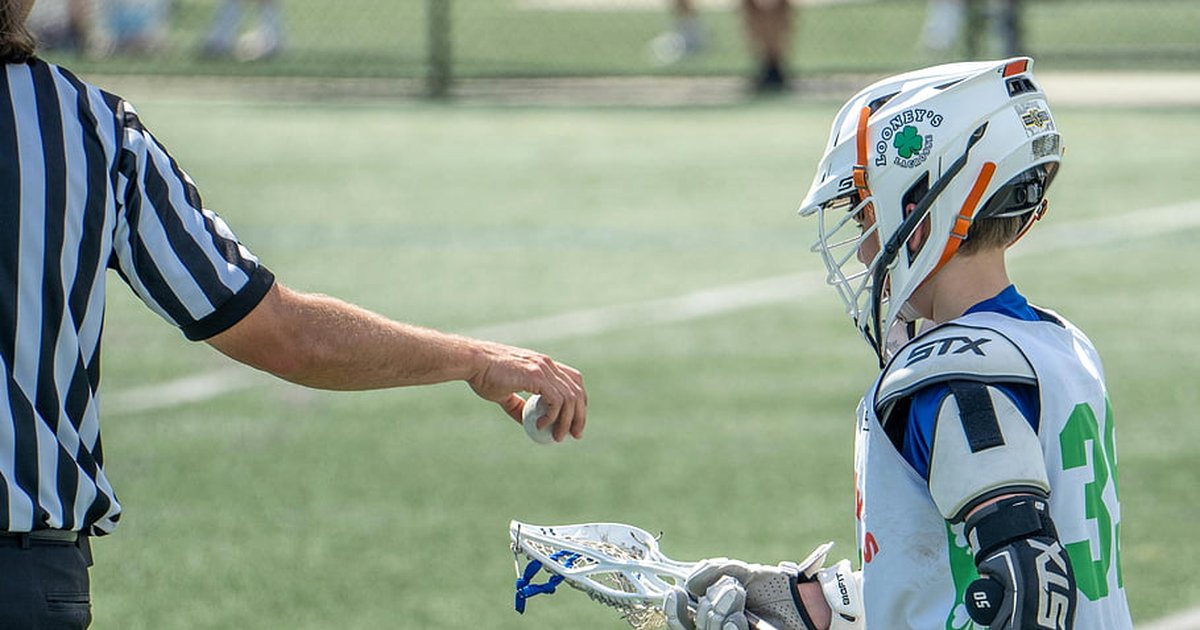
What Youth Lacrosse Is
Youth lacrosse is the introductory and developmental level of the sport, serving children from the first years of elementary school through middle school. It is not a scaled copy of the high school game. Under the USA Lacrosse youth framework, the game is deliberately modified: smaller fields, fewer players at young ages, shorter games, and checking rules that are introduced gradually in the boys game and kept restricted in the girls game. The goal is touches, decisions, and confidence. A seven year old needs a hundred ground balls more than she needs a full field game plan.
Both boys and girls play youth lacrosse, in separate programs with different equipment and contact rules. Boys play a checking game with helmets and pads, with contact staged in as they grow. Girls play a limited contact game built around stick skill, speed, and positioning, with goggles instead of helmets for field players.
How Age Divisions Work in General Terms
USA Lacrosse groups youth players by age into divisions, commonly labeled with the age and the letter U, such as 8U, 10U, 12U, and 14U, meaning players of that age and under compete together. Placement is based on player age on August 31 before the season, the standard cutoff in the USA Lacrosse framework, so a league can verify every roster the same way. Most leagues also require a current USA Lacrosse membership for each player before the first practice. Your league registers your child into the matching division; parents do not choose divisions by size, skill, or school grade, though grade based programs exist in some areas alongside the age based system.
The practical effect is fair matchups. Children play against children of similar age and size, and the rules for that division, including field size, roster size, and checking limits, are written for that stage of development. When your child moves up a division, expect the game to look a step closer to the full sport: a bigger field, more players, and in the boys game, more complete checking within the rules.
Seasons and the Lacrosse Year
Spring is the main youth lacrosse season in most of the country, when leagues run their regular schedules, playoffs, and end of season events. Fall often brings shorter developmental leagues, clinics, and in some regions box lacrosse or indoor play, which uses a smaller space and keeps sticks in hands through the winter. Summer is tournament and camp season for families who want more. None of the off season options are required. Many strong high school players grew up playing spring league and a little backyard lacrosse, and multi sport children should protect their other seasons; lacrosse benefits from athletes, not just specialists.
Equipment Overview
Boys need a helmet with a face mask, a mouthguard, shoulder pads, arm pads, gloves, cleats, and a boys stick. Girls need approved goggles, a mouthguard, cleats, and a girls stick, with gloves optional in many programs. Goalies on either team wear additional protection, including a chest protector and a throat guard. Many programs lend goalie gear and help new families source starter equipment, and a first season is the wrong time to buy top end anything. Fit and completeness matter; price and brand do not. The equipment articles on this site cover youth gear in detail.
What to Expect at Practices and Games
Expect practices of about an hour to ninety minutes, built from short drill stations and small sided games, especially at young ages. Expect your child to rotate positions rather than specialize; youth coaches who fix an eight year old at one position are working against the framework. Games at the youngest divisions emphasize participation, with modified restarts and officials who teach as they call the game. Playing time is generally shared in youth leagues, though the balance can shift in older divisions and select programs, so ask your program directly how it handles playing time before the season starts.
Parents help most by handling three things: arrive with full gear and water, cheer effort and good plays by both teams, and let coaches and officials do their jobs without sideline instruction. The children who stay in lacrosse for years are almost always the ones whose ride home was about what they did well and whether they had fun.
A Parent Checklist for the First Season
| Task | When |
|---|
| Register and confirm the age division | Before the registration deadline |
| Confirm USA Lacrosse membership if your league requires it | Before the first practice |
| Attend the parent meeting and note division modifications | First week |
| Fit and label all required equipment | Before the first practice |
| Confirm practice days, times, and field location | First week |
| Save the coach contact and the league schedule | First week |
| Plan water, sunscreen, and layers for game days | Every week |
| Ask about playing time and position rotation approach | Early season, directly with the program |
A Season on the Ground: What the Weeks Actually Feel Like
The first practice is mostly gear and names. Coaches check helmets and goggles, hand out pinnies, and teach the scoop before anything that looks like a game. Parents watching for scrimmages in week one are watching for the wrong thing. The repetition that builds a player at this age is touches: scoops, catches, short passes, repeated until they are boring and then automatic.
By the middle of the season the shape changes. Small sided games take more of the practice, positions stop rotating quite as freely, and your child will announce a preference, usually goalie, middie, or wherever her best friend plays. Games develop a rhythm a parent can learn to read: the team that wins ground balls controls the afternoon, and the scoreboard matters less than whether the ball is finding every child on the field.
The last weeks bring the honest test. Players who have touched the ball hundreds of times start making decisions: passing ahead instead of running into trouble, spacing out instead of swarming. That growth, not the win column, is what a youth season is for, and it is the standard to judge the program by when registration opens again.
The Money and Time Picture, Without Surprises
Youth lacrosse asks for three kinds of commitment, and families plan better when all three are named. Registration covers league play and varies widely by region and program. Equipment is the second cost, and it is front loaded: a starter set, a helmet for a boy or goggles for a girl, a mouthguard, and cleats cover the first season, with loaner and rental programs at many clubs softening the first year. The third commitment is the calendar. Expect one or two practices on weeknights and a game on the weekend during the spring season, with tournaments adding full days at the older youth divisions.
None of this needs to be bought in a panic. The gear guide and the division guides on this site walk through each piece, and the starter set article explains what a first kit should and should not contain. Buy for the division your child is actually in, in the season she is actually playing.
Choosing a Program: Five Signals That Matter
A good youth program teaches in small groups, and you can see it in the first ten minutes of a practice: lines are short, every child has a ball or is chasing one, and no one stands in a semicircle watching one player work. A good program also explains its checking stage and its playing time policy at the parent meeting without being asked twice. It puts new players at several positions across the season. It communicates the schedule early and changes it rarely. And its coaches correct equipment problems, a loose helmet, a missing mouthguard, a deep pocket, at the gate rather than on the field. Programs that do those five things keep children in the sport. Programs that do not, lose them, whatever their trophy shelf looks like.
The First Game Day, From Arrival to the Ride Home
Arrive early enough that the gear check is boring. Players put on cleats, boys settle helmets and girls settle goggles, and coaches count mouthguards the way teachers count permission slips. Warmups at youth level are short versions of practice: scoops, partner passing, and a few shots for the goalies. Parents who watch warmups learn the teams vocabulary in one afternoon, which makes the game itself far easier to follow.
During the game, expect the officials to explain as they enforce, especially at the youngest divisions. A whistle followed by a short teaching sentence is the youth game working as designed. After the game, the ride home sets the tone for the season. The players who stay in youth sports longest consistently report the same thing: the car ride talked about effort, teammates, and one good moment, not about the score or the officials. A family that protects the ride home protects the whole investment the season represents.
Siblings, Second Sports, and Staying in the Game
Youth lacrosse families rarely run one child or one sport at a time. The calendar in this guide is built to be shared: a spring lacrosse season pairs naturally with fall and winter sports, and the skills transfer in both directions. Ground ball habits make better soccer midfielders. Basketball footwork shows up in lacrosse defense within a month. The programs worth choosing are the ones that know this and schedule like it, because a youth system that demands exclusivity at age nine is selecting for families, not for athletes. The child who arrives at 14U still loving the game, with three sports of movement in her legs, is the player the whole structure exists to produce.
Frequently Asked Questions
What age can a child start youth lacrosse?
Most programs start at 6U, which in practice means children around five and six years old playing small sided games on small fields with modified rules. Some areas run even younger clinic formats with soft balls and no contact. The right starting point is the youngest division your local program offers, because the modifications are built for exactly that child.
Does my child need experience or a tryout to join?
Recreation youth lacrosse is built for beginners and normally has no tryout. Registration places a child in an age division, and coaches teach from the first scoop. Select and travel layers exist at older youth ages in some areas, and those do evaluate players, but they sit on top of the open recreation base rather than replacing it.
How long is a youth lacrosse game?
It depends on the division. The youngest divisions play short running clock periods on small fields, while 12U and 14U games look much closer to the high school format. Your league sheet states the exact period length and clock rules for your childs division, and the game length article on this site walks through the pattern by age.
What equipment does a beginner need on day one?
A stick, a mouthguard, and the protective set for the game being played: helmet, gloves, arm pads, and shoulder pads for boys, certified eyewear for girls, with goalies in both games adding throat protection and a chest protector. Many programs lend or rent the protective set for a first season, so ask before buying everything at once.
Can girls and boys play youth lacrosse together?
The youngest clinic formats in some areas are mixed, but organized youth lacrosse separates into the boys game and the girls game early, because the two games have different rules, different sticks, and different protective equipment. Each game has its own division ladder from 6U through 14U.