Passing and Catching Drills
Four Corners Passing. Set four cones in a square, about 10 to 12 yards per side, one player per cone with extras behind one cone. The ball moves around the square, each player catching, turning the hips, and passing to the next cone. Run 60 seconds clockwise, rest, then 60 seconds the other way.
Line Drills With Movement. Two lines face each other about 15 yards apart. A player passes to the opposite line and follows the pass to the back of that line. Run 3 sets of 90 seconds. Coaching point: pass overhand, catch in front, and never stand still after releasing. This is the warm up engine of most practices because touches pile up fast.
Ground Ball Drills
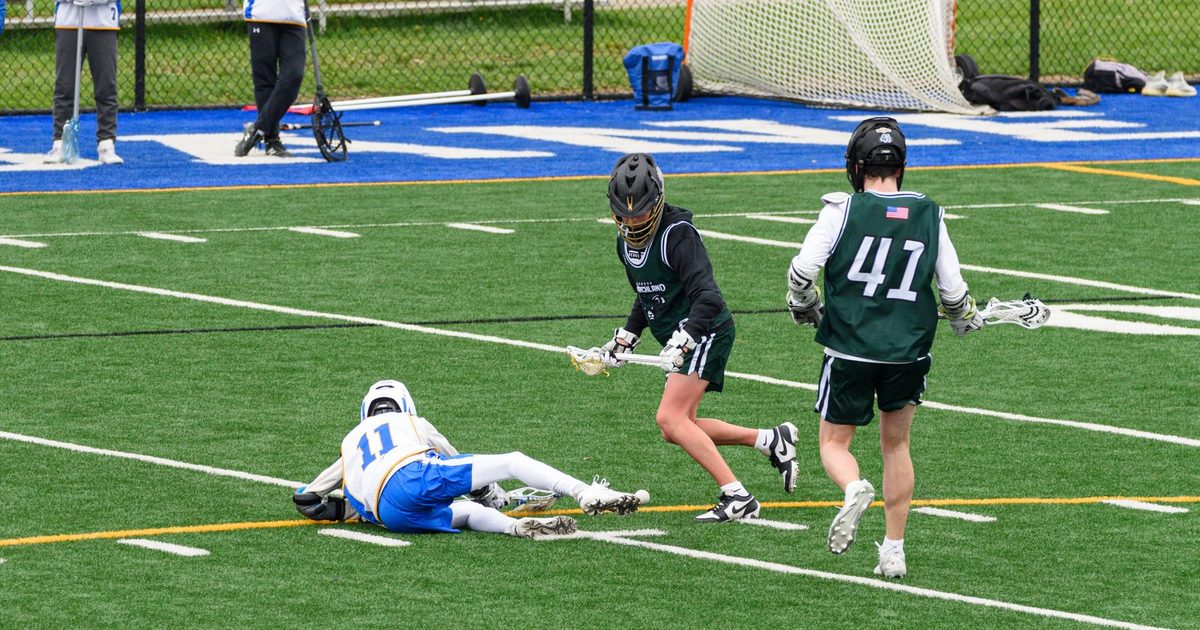
Two Player Race and Chase. A coach rolls a ball out about 10 yards. Two players start side by side, race to scoop it, and the winner cradles out for 5 yards while the loser chases with legal pressure and no take out contact at youth levels. Run 6 to 8 reps per pair, then switch partners.
Ground Ball to Pass. Same race setup, but the winner must scoop and immediately pass to a target player standing 8 yards to the side. Run 5 reps per side. Coaching point: head up during the scoop exit. Ground balls that end in a blind cradle become turnovers. Ground balls that end in a pass become offense.
Dodging Drills
Cone Dodge Series. Place 5 cones in a line, about 5 yards apart. A player carries at three quarter speed and executes one named dodge at each cone: split dodge, face dodge, roll dodge in rotation. Run 4 trips through the line, alternating starting hand.
1 Against 1 From the Wing. Attacker starts at the wing about 12 yards from the goal, defender starts goal side. Play live to a shot or a clear takeaway, 20 seconds maximum per rep. Run 5 reps, then switch roles. Coaching point for attackers: attack the defender top foot and shoot on the run only after gaining a step.
Shooting Drills
Catch and Shoot on the Move. A feeder stands behind or beside the goal area and passes to a shooter cutting across the front at about 8 to 10 yards out. The shooter catches in stride and shoots at a called corner. Run 10 shots per side, then switch feeder and shooter.
Time and Room Step Down. A player starts about 15 yards out, receives a pass, takes one or two steps toward the goal to close distance, sets the feet, and shoots with time and room. Run 8 shots from the top, 8 from each wing. Coaching point: this is the power and accuracy shot.
Defense Drills
Approach and Breakdown. A defender starts near the crease, sprints out about 7 yards toward an attacker standing with the ball, breaks down into short choppy steps for the last 3 yards, and arrives under control with stick up. Run 6 reps, alternating sides. Coaching point: arrive balanced, not lunging.
Conditioning Drills That Teach Skills
Full Field Clear and Ride Game. Play 5 against 5 or 6 against 6 in the full field or a shortened field. After every save or goal, the ball must be cleared past midfield within a set count while the other team rides. Run in 3 minute games, rest 1 minute, play 3 games. Coaching point: conditioning hidden inside real decisions beats running without sticks.
Shuttle Ground Balls. Place balls at 5, 10, and 15 yards from a start line. A player sprints to the first ball, scoops, returns it to the start, then repeats for the farther balls. Run 3 full shuttles, rest while a partner goes. Coaching point: this is conditioning with a stick skill attached to every sprint.
Building a Practice From the Library
Pick one drill from each family for a balanced session: 10 minutes passing, 10 minutes ground balls, 12 minutes dodging and 1 against 1, 12 minutes shooting, 10 minutes defense, and a conditioning game to finish. Write the reps on a board before practice.
Goalie and Faceoff Drills
The library above covers the field positions. Two specialist families complete the picture.
Arc Footwork Saves. The goalie starts on one pipe. A coach at eight yards calls a side, the goalie steps the arc with small steps, sets, and faces a shot at half speed. Run 8 shots per side, then raise speed. Coaching point: move on the pass or the call, never on the shot itself, and keep the stick head in front of the chest through the step.
Outlet After the Save. Every save in the arc drill ends with a clearing throw to one of two targets at the restraining line. Run the pair of drills together for 10 minutes. Coaching point: the save is only half the rep; a goalie who scans during the shot already knows the outlet before the ball arrives.
Faceoff Clamp and Exit. Two faceoff players set on a whistle cadence. On the whistle both clamp, and the winner must exit forward or backward as the coach calls it during the clamp. Run 10 whistles, then switch the call pattern. Coaching point: the clamp wins the ball, but the exit direction decides possession, so wings must react to the call as fast as the faceoff player does.
A Two Week Practice Rotation
Coaches with two practices a week can rotate the library without repeating a session. Week one, practice one: Four Corners Passing, Two Player Race and Chase, Cone Dodge Series, and the Full Field Clear and Ride Game. Week one, practice two: Line Drills With Movement, Ground Ball to Pass, Catch and Shoot on the Move, and Approach and Breakdown. Week two repeats the cycle with one change per drill: weak hand requirements in week two passing, a time limit on week two ground balls, and a called corner on week two shooting. The rotation keeps coaching points fresh while the repetition underneath stays constant, which is how youth players actually absorb skills.
Measuring Whether a Drill Is Working
A drill earns its place when a game skill improves, so track one number per family for a month. Count clean catches in Four Corners across 60 seconds. Count scoops won in the race drill out of eight reps. Count shots on target out of ten in the step down drill. Write the numbers on the practice board. Players chase numbers honestly, and a coach can see in three weeks whether the library is producing skill or only filling time.
Adapting the Library for Small Rosters and Young Ages
Small programs rarely have the numbers the drill diagrams assume, so adapt by shrinking space before shrinking standards. Four Corners becomes Three Corners with a feeder. The race and chase runs with one pair at a time and the rest of the team doing wall ball beside it, rotating every set. The clear and ride game becomes 3 against 3 on a half field, which preserves the decisions while fitting eight players. For the youngest ages, shorten every distance by a third, use a softer ball where the program allows it, and count success out loud after every rep. Young players repeat what gets counted and praised; a coach who counts clean catches gets clean catches.
Drill Selection by Team Weakness
Choose drills by the weakness the last game exposed, not by habit. A team that lost the ground ball count starts the next practice with the race and chase and the shuttle, and keeps them until the count flips. A team whose clears died at midfield lives in the clear and ride game for two weeks. A team that dodges into slides needs the 1 against 1 wing drill with a feeder added, so dodgers learn to move the ball when help arrives. A team that cannot catch under pressure shortens Four Corners until the square is crowded and loud. This weakness first method makes the library a coaching tool rather than a menu, and players understand why each drill appears, which doubles the effort they bring to it.
Frequently Asked Questions
How many drills should a practice include?
Four to six focused drills beat ten rushed ones. Each drill needs enough reps for a correction to be practiced, not just heard. If players cannot explain the coaching point of a drill afterward, the practice had too many drills.
Can these drills be done alone?
Passing becomes wall ball, ground balls and dodging work alone well, and shooting works alone with a goal and balls. Defense footwork and conditioning shuttles also work solo. The solo training article on this site gives full routines for training by yourself.
How do I make a drill harder without adding contact?
Add a second ball, shrink the space, add a time limit, require the weak hand, or add a decision, such as the feeder calling a corner or a dodge name late. Difficulty should come from speed and decisions before it comes from contact.
How long should each drill run at youth level?
Eight to twelve minutes per drill keeps youth attention and rep quality high. Beyond that window, footwork gets sloppy and players rehearse mistakes. It is better to run a favorite drill again at the next practice than to stretch it past the point where form collapses.
What is the best drill for a brand new team?
Start with Line Drills With Movement and the Two Player Race and Chase. The first stacks passing and catching touches quickly with no tactics to learn. The second teaches the ground ball, the skill that decides youth possession, in a format players understand in one sentence.