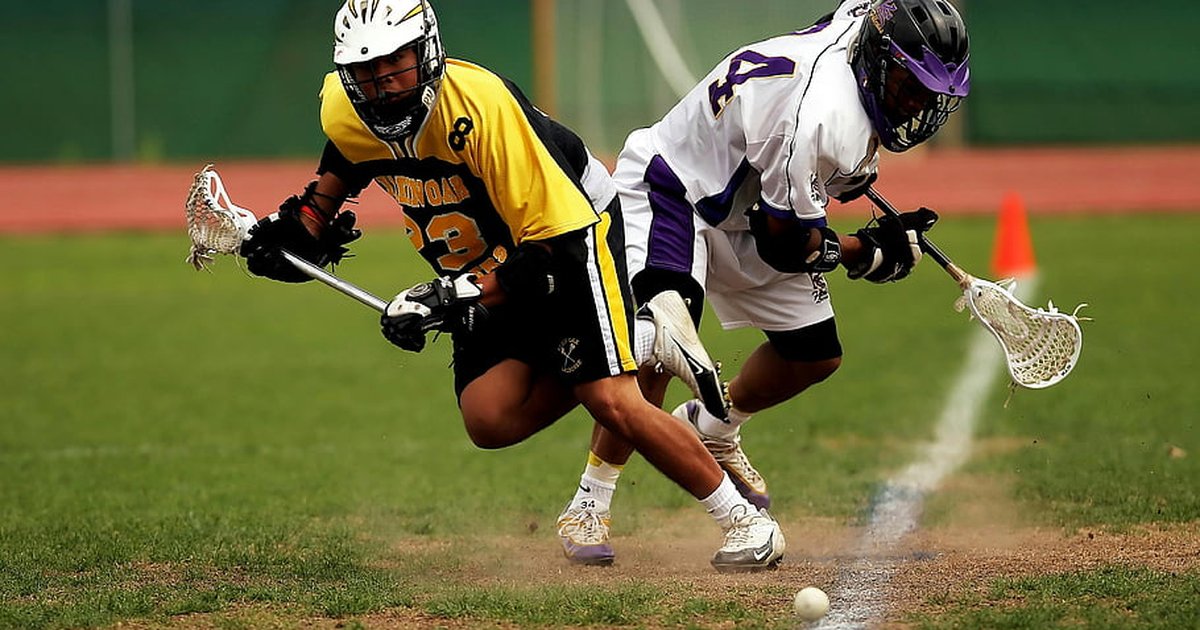
No Goalie Has a Fighting Exemption
The question usually comes from a video: two padded goalies at center, gloves off, a roaring crowd. It looks like a rule. It is not. No lacrosse rule book, field or box, boys, girls, mens, or womens, gives a goalie permission to fight. A goalie is a player with extra protection and extra privileges inside the crease, and exactly the same fighting ban as everyone else. At youth, high school, and college levels, fighting is simply prohibited: a player who fights is penalized for unsportsmanlike conduct, ejected, and usually suspended by the league on top of the game penalty.
The famous goalie fights come from professional box lacrosse, and even there the word allowed is wrong. Box rule books write fighting down in order to punish it. What the pros have is a culture that tolerates an occasional fight the way a speed trap tolerates nothing: the penalties arrive every time, and the players accept them as the price. That is a very different thing from a right to fight, and it does not exist at any level a young goalie will ever play.
What a Fight Costs, Level by Level
| Level | May a goalie fight | What it costs |
|---|
| Youth | No | Ejection for unsportsmanlike conduct; league suspension is common; the team finishes with a backup or a converted field player in goal |
| High school | No | Ejection, with state association discipline on top at many schools; a backup goalie or emergency replacement takes the crease |
| College | No | Ejection and suspension under NCAA conduct rules; the backup goalie enters |
| Box lacrosse, amateur | No | Fighting major plus a game misconduct under the Rule 45 pattern used in Canadian and US box books; an instigator draws additional penalties; a goalkeepers penalty is served by a teammate who was on the floor |
| Box lacrosse, professional | No, despite the videos | Major penalty and ejection exposure under the league book, with fines and suspensions at league discretion |
In the boys and mens field game, ordinary personal fouls run 1 to 3 minutes, stated here as labeled contrast: fighting is not priced in that range at all. It skips the penalty box logic and goes straight to removal, because the books treat it as conduct, not as a playing foul.
Why the Goalie Version Is Worse
A field player who is ejected hurts his team. A goalie who is ejected can end its afternoon. Every team carries exactly one starting goalie, the backup is often a younger player with a fraction of the reps, and some youth teams have no true backup at all, so a coach is fitting a field player with goalie gear during a timeout. The fighting goalie also abandons the one job no one else can cover mid-play: while he is at center floor or field, his goal is empty.
There is a second, quieter cost. Goalies are protected by the rules inside the crease, where opponents may not contact them. A goalie who starts fights teaches opponents and officials to see him as a combatant, and the benefit of every close call in the crease matters more over a season than any single fight.
What a Goalie Should Do Instead: A Checklist
- When an opponent crowds the crease, use the protection the rules give you: play the ball, call for the officials attention, and let the crease rules work.
- When a scrum forms after a save, step back to the goal line and keep the stick down. Officials sort scrums by who escalates.
- When a teammate is in a shoving match, be the voice that ends it. Goalies are captains of the defense; officials remember it.
- When you are hit late or run into, tell your coach at the next stoppage rather than answering it. A reported pattern gets officiated; a retaliation gets ejected.
- In box, know your books fighting rule before the season, not during the game.
Where the Fighting Idea Comes From, and Why It Does Not Transfer
The question usually arrives from hockey. In some hockey leagues, goalie fights are a famous rarity, tolerated by tradition in a way that has no parallel in lacrosse. Lacrosse never built that tradition. The field game treats fighting as a disqualifying act at every level, and the box game, which allows more physical play in almost every other respect, still answers a fight with a major penalty and a game misconduct. A goalie who imports the hockey script into a lacrosse game discovers the difference in the time it takes an official to reach for the card or the game sheet.
There is also a structural reason the tolerance never developed. A hockey team dresses a backup goalie in full gear on the bench. A lacrosse team at most levels dresses one goalie, and the emergency replacement is a field player borrowing gear that does not fit, holding a stick he does not use, in front of a goal he has never defended. The sport cannot afford the spectacle, so the rules price it accordingly.
The Penalty Picture, Stated Carefully
Exact wording differs by rulebook, and families should read the book their league plays under, but the shape is consistent. In field lacrosse under NFHS and NCAA rules, fighting is an expulsion level offense: the player is done for the game, the team plays down through the penalty, and further discipline from the league or school can follow. In box lacrosse under the rules used by the major leagues and federations, a fight draws a major penalty plus a game misconduct, which removes the player and hands the other team an extended power play. Youth leagues layer their own consequences on top, and at youth level a fight usually ends the players day and starts a conversation nobody wanted.
For a goalie, every one of those outcomes carries the same extra line: his team must now defend its goal with someone else. The penalty minutes are only the first installment of the cost.
What Smart Goalies Do With the Anger Instead
The moments that tempt a goalie toward a fight are predictable: a crease crash, a late slash on a clear, a shooter who celebrates through the crease. The veteran responses are boring and effective. Step out of the crease between plays and reset the defense with a call, which spends the adrenaline on communication. Hand the ball to the official slowly and take the full count to breathe before the restart. Tell the captain and the coach what happened and let them carry it to the official at the next stoppage, because a complaint from a captain is heard and a swing from a goalie is punished. And in the next possession, make the save. A goalie who answers a cheap shot with three straight stops has won the only exchange the scoreboard records.
The Backup Goalie Problem, Explained for Parents
Parents new to the sport sometimes ask why lacrosse treats this so much more harshly than the hockey they grew up watching. The answer is standing on the bench, or rather, not standing there. A lacrosse roster at school and youth level usually carries one goalie in full gear. The second goalie, where one exists, is often a younger player with a field stick and a borrowed chest protector two sizes off. When the starter is ejected, that is who jogs to the crease, usually to a long afternoon.
Coaches plan for injuries with that reality. They do not plan for ejections, because an ejection for fighting is a choice, and the rules are written to make sure it stays an expensive one. Understanding the bench arithmetic turns the rule from an abstraction into common sense: the goalie is the only player whose absence rewrites his teams entire defensive structure, and the rulebook protects the position by pricing its worst impulse out of reach.
A Note on Box Lacrosse and Its Different Reputation
Box lacrosse allows cross checking, embraces physical play, and still ejects fighters. The indoor game is the useful counterexample for anyone who believes fighting is simply part of lacrosse culture at the rough end of the sport. The roughest version of lacrosse played at the highest level answers a fight with a major penalty and a game misconduct, every time, and its goalies, who wear more padding than anyone in the building, are bound by the same answer. If the box game does not make room for it, no version of the sport a young goalie will ever play makes room for it either.
What Officials Wish Goalies Knew About the Crease Crash
Ask officials what they want from a goalie after a crease crash and the answer is consistent: give us a second. A goalie who stays composed gives the crew time to sort the crash, the crease violation, and any foul in the right order, and the call that comes out of that sorting usually favors the team that was wronged. A goalie who retaliates scrambles the order, because now there are two acts to judge and the second one is always seen more clearly than the first. Composure is therefore not just temperament. It is a competitive tactic that measurably improves the quality of the call your team receives, and it costs nothing but the swing you were never allowed to take anyway.
Frequently Asked Questions
Have goalies actually fought in lacrosse?
Yes, most famously in professional box lacrosse, where goalie fights have happened on camera more than once. Those goalies were penalized under the box fighting rule like any other player. The videos show the fight; they rarely show the misconduct, the ejection risk, or the suspension letter.
Can a goalie be checked like a fighter when he leaves the crease?
A goalie who leaves the crease with the ball can be legally checked as a ball carrier in the boys and mens game, within the normal checking rules. That is a playing rule, not a fighting license, for either side.
What happens if both goalies fight?
Both are treated as fighting players: ejections in field lacrosse, majors and game misconducts in box, and both teams go to their backups. It is the fastest way for two starters to watch the rest of a game from the stands.
Is fighting allowed between any players in lacrosse, or only restricted for goalies?
Fighting is not allowed for any player. Field players who fight face the same expulsion level consequences as goalies. The goalie version is simply worse for the team, because the ejection removes the one player with no true substitute and forces an emergency replacement into the goal.
What should a goalie do if an opponent crashes into him in the crease?
Stay on his feet if he can, protect himself with his stick and body position, and let the officials call the crease violation or the foul that the crash usually is. Then reset the defense and make the next save. Retaliation turns a power play his team was about to receive into an ejection his team cannot afford.