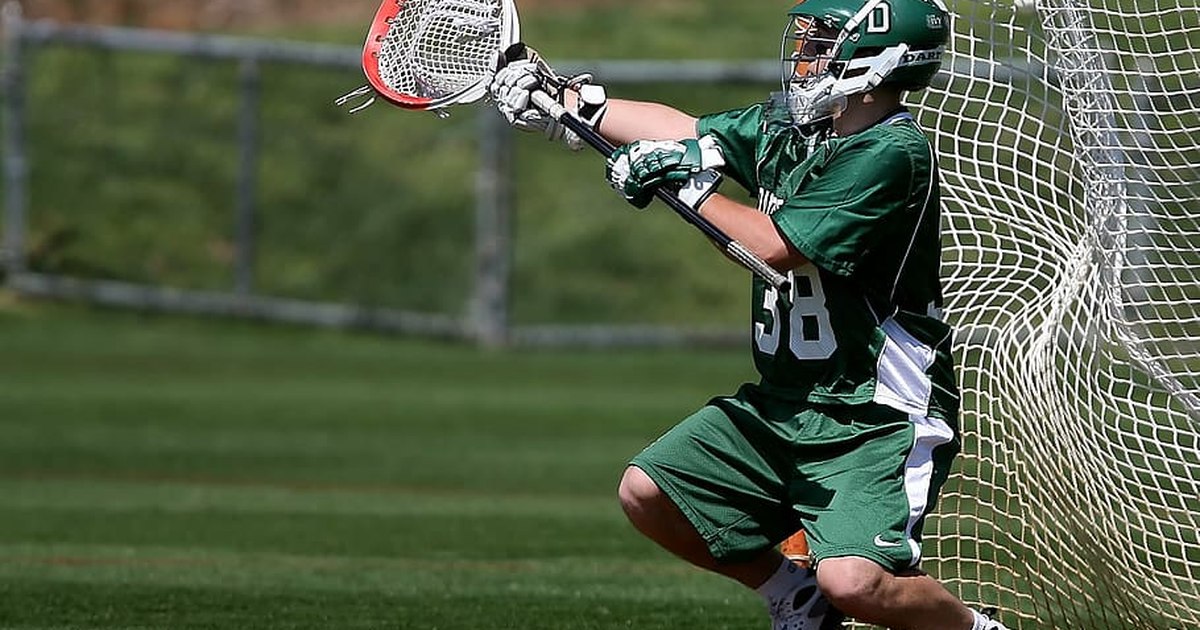
Playing Goalie Is Three Jobs in One Crease
A lacrosse goalie stops shots, starts the offense after every save, and directs the defense in front of her or him. New players think the first job is the whole position. Coaches know the other two decide games: a goalie who clears well turns saves into fast breaks, and a goalie who talks early prevents shots that never need saving. This step by step guide builds the position in that order, stance and arc first, then save mechanics by shot location, then clearing and communication.
Gear up completely before any live shots: helmet with an attached throat guard, a chest protector meeting NOCSAE ND200, goalie gloves with reinforced thumbs, a mouthguard, and a goalie stick sized inside the legal range for your game, 40 to 72 inches in the boys game and 35.5 to 52 inches in the girls game. The goal itself is six feet wide and six feet tall, and everything in this guide is about defending that square from a crease you may not leave carelessly.
Step One: Stance and the Ready Position
Stand on the balls of your feet, knees bent, weight balanced so you can step in any direction. Your stick is held in front of your chest, head of the stick up beside your helmet, bottom hand at the throat end of the shaft grip, ready to drive the stick head to the ball. Your hands stay away from your body, because a stick pinned to the chest cannot reach a corner.
Keep your elbows soft and your eyes on the ball, not on the shooters stick fake. A good ready position looks boring in photographs: level shoulders, stick visible to the shooter as a wall, feet under the hips. If your heels are on the ground or your stick rests on your shoulder, fix that before any drill starts, because every later save is built on this base.
Step Two: Play the Arc
Goalies do not stand on the goal line except when the ball is behind the goal. They move on a shallow arc inside the crease, staying between the ball and the center of the goal, a step or two off the line as the ball moves higher. When the ball is at the top, you are at the top of your arc. When it swings to a wing, you step toward that post. When it goes behind, you turn, find the post with your hand or stick, and hug it until the dodge comes around.
| Ball location | Your position | What you protect first |
|---|
| Top center, 12 to 15 yards | Top of the arc, big and square | Both high corners, by staying balanced |
| Wing, on your left | Step toward the left post, stick high | The near side shot and the far side feed |
| Behind the goal at X | Turn to the ball side post, pipe tight | The crease roll and the quick feed in front |
| Crease, loose ball | Stay home unless the ball is truly free | A fake scoop by an attacker waiting for you to lunge |
| Fast break coming at you | Backpedal slowly, delay your commitment | Time for your defense to recover behind the play |
Step Three: Save Mechanics by Shot Location
High shots: drive your top hand across your body to the ball and step with the foot on the shot side. The stick meets the ball in front of your face, never beside your ear. Off stick high is the hardest save for most beginners, so drill it slowly until the hand path is automatic.
Mid height shots: the stick turns over or under depending on the side, and your body steps behind the stick so a rebound drops in front of you, not past you. Low shots: get the stick head down fast, top hand punching down, while your shin and foot back up the stick. Bounce shots: read the bounce point, not the release, and move to where the ball will rise, smothering it early when you can.
The universal rule is step to the ball. A goalie who reaches without stepping saves the shots aimed at her and watches the rest go in. A goalie who steps turns her whole body into a second wall behind the stick.
Step Four: After the Save, Clear With a Purpose
A save is not finished when the ball hits your pocket. Control the rebound, scan the field while the shot is still coming, and pick an outlet before the defense resets. The boys goalie has four seconds with the ball inside the crease. The girls goalie has ten seconds. Use that count to find a midfielder breaking up the sideline or a defender peeling to the corner, and throw a firm, catchable pass to the side away from pressure.
If no outlet opens, carry the ball out yourself with your head up, or pass back into the crease area only where your rules allow it and a teammate is truly open. Turnovers on clears waste saves, and they usually come from throwing to a stationary teammate with a rider on his back.
Step Five: Talk Like a Director, Not a Spectator
Call the ball location on every pass: top, left wing, behind, crease. Name the dangerous cutter before she cuts. Tell your crease defender when to slide and your wings when a fast break is coming. Short, loud, early calls are the standard. A defense that hears the goalie constantly settles down, because someone with the full picture is steering.
After a goal against, your voice matters most. Reset the defense by name, remind them of the next matchup, and put the last shot away. Goalies who sulk in the crease give up second goals in bunches.
A First Month Practice Plan for a New Goalie
Week one is stance, arc steps, and tennis ball reaction work with no live shots. Week two adds half speed shots to called locations, high first, then low. Week three adds bounce shots and save to clear sequences against a coach. Week four adds screens, crease rolls, and full speed team shooting for short blocks. Every week ends with film or a simple save log: shots faced, goals allowed by location, and one pattern to fix. Low shots leaking on the stick side is a stance problem. High off stick goals are a hand path problem. The log tells you which drill comes next.
Reading Shooters Without Guessing
New goalies guess. Experienced goalies collect information. A shooters stick position tells the likely height family: a stick cocked high usually throws high or bounces from a high release, while a low wind up threatens low corners and bounce shots. A shooter running full speed toward you has fewer options than a set shooter, and a shooter whose head drops to look at the goal is about to shoot rather than pass. None of these reads is a promise, and the stance never changes on a read alone. They simply move your weight a fraction earlier, which is all a save ever needs.
Feeds change the picture faster than dodges. When the ball goes behind the goal, expect the quick feed to the crease or the roll, and say so out loud. When a cutter flashes through the middle with her stick up, name her number to your crease defender. Half of goalie play happens before the shot, in the two seconds when your call can move a defender one step into the passing lane.
Handling Goals Against: The Reset Routine
Every goalie gives up goals, including goals that feel personal. Build a physical reset: touch both posts, take one slow breath, call the defense back into its shape by name, and state the next job out loud, such as win the draw or stop the first shot of this possession. The routine takes five seconds and prevents the most common goalie collapse pattern, where one goal becomes three because the goalie is still replaying the first while the next two develop.
Coaches can help by never substituting a goalie immediately after a single soft goal without a word. A short conversation at the next stoppage, one mechanical point and one statement of confidence, keeps a developing keeper in the game mentally even when a change is tactically right.
Girls and Boys Goalies: Shared Craft, Different Clocks
The stance, arc, and save mechanics in this guide are shared across both games. The differences are administrative and structural: the crease clock is four seconds for boys and ten seconds for girls, the girls game restarts with a draw where your team needs you directing traffic quickly, and girls goalies defend an 8 meter arc where free position shots start from hash marks close to the goal. A goalie who crosses between games should drill the clock difference first, because clears that are leisurely in one game are violations in the other.
Frequently Asked Questions
How do I become a lacrosse goalie if I have never played?
Start with full certified gear, stance and arc footwork, and soft ball reaction drills before facing live shots. Programs often need goalies, so a willing beginner who learns positioning and clearing can earn real playing time within one season.
Where should a goalie stand when the ball is behind the goal?
Turn toward the ball side, find that post, and stay tight to it with your stick ready for the feed or the roll dodge. Leaving the post early to chase behind the goal opens the exact crease shot the attack wants.
How long can a goalie keep the ball in the crease?
In the boys and mens game the goalie has four seconds to get the ball out of the crease. In the girls and womens game the limit is ten seconds. Both clocks reward goalies who scan for outlets during the shot.
What is the hardest shot for a lacrosse goalie to save?
For most developing goalies it is the high shot to the off stick side, because the top hand must cross the body quickly while the feet step the same way. Bounce shots are a close second until a goalie learns to read the bounce point.
Do goalies need a different stick than field players?
Yes. A goalie stick uses a much wider head, up to 12 inches, and a longer overall range than a short stick. Its pocket is strung deeper for rebound control and clean outlets, within the legality rules of that game.