Goalie Equipment Is a System, Not a Longer Shopping List
A field players kit protects against checks and falls. A goalies kit protects against the ball itself, shot from close range at speeds no other player faces, and every piece exists because of a specific shot location. This guide explains each piece of lacrosse goalie equipment, whether it is required or optional, the standard it must meet, and how it should fit, for both the boys and girls games. The governing source is the USA Lacrosse Equipment Guide, and the two standards that matter most recur through the whole list: NOCSAE ND200 for chest protection and certified helmet standards for the head.
Buy in the order of the table: helmet system first, chest protector second, then gloves, stick, and the lower body pieces. A goalie with a perfect stick and a poor chest protector has the budget exactly backwards.
The Complete Goalie Equipment Table
| Piece | Required or optional | Standard or rule | Fit essentials |
|---|
| Helmet | Required | Certified lacrosse helmet meeting the current NOCSAE standard | Snug all around, front edge low over the brow, chin cup centered |
| Throat guard | Required | Attaches to the helmet, covers the throat and upper chest gap | Hangs flat, moves with the helmet, no wide gap at the sides |
| Chest protector | Required | Must meet NOCSAE ND200 | Covers sternum and ribs, straps snug, arms raise freely |
| Goalie gloves | Required | Padded goalie model with reinforced thumb | Thumb protected, fingers reach the end, grip secure on the shaft |
| Goalie stick | Required | Head up to 12 inches wide; complete length 40 to 72 inches boys, 35.5 to 52 inches girls | Pocket legal, balance comfortable for clears |
| Mouthguard | Required | Molded, visible, worn at all times on the field | Custom molded to the player, spare in the bag |
| Protective cup (boys) | Required | Hard cup in a supporter or compression short | Worn for every practice and game, no exceptions |
| Shin guards and padded pants | Optional in most field formats, common at youth levels | League rules vary | Coverage without limiting the stance or the step |
| Arm pads | Optional for most goalies | League rules vary | Light coverage that does not slow the hands |
The Helmet and Throat Guard: One System
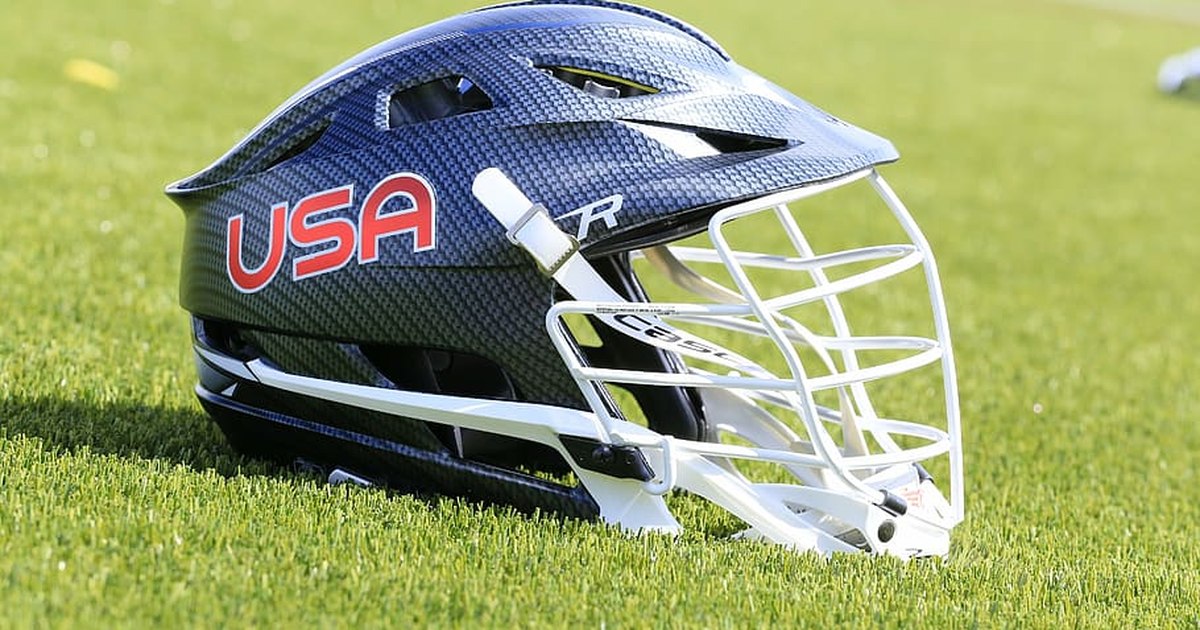
Fit the helmet by head measurement, not by age label. The front edge sits low and level over the eyebrows, the chin cup centers, and the whole helmet moves with the head in a shake test without shifting. Attach the throat guard so it hangs from the helmet and covers the gap between the mask and the chest protector through your whole stance, including when you drop for a low shot. That dropped position is when throats get exposed, so check the coverage crouched, not standing tall in the shop.
The Chest Protector and the ND200 Mark
USA Lacrosse requires goalie chest protectors to meet NOCSAE ND200, the standard written to reduce commotio cordis risk, a rare but fatal heart rhythm event caused by a ball striking the chest at the wrong moment. Look for the ND200 mark on the product itself, not just in advertising. Field player shoulder pads, even expensive ones, are not a substitute, because they are built and certified for a different job. Fit the protector so the sternum plate centers on the chest, the sides wrap the ribs, and you can still raise both arms fully overhead for high saves and outlet passes.
Gloves, Stick, and the Lower Body
Goalie gloves add padding across the back of the hand and a reinforced, often extended thumb, because the top hand lives directly behind the stick head in the shot line. A field glove on a goalie is an injury waiting for its shot. The stick should be strung for rebound control and clean outlets, with its pocket checked against the legality test for your game. Lower body choices are comfort and level decisions: many youth goalies wear shin guards and padded goalie pants while learning, and most older goalies drop pieces that slow their step, within whatever their league requires. Cleats match the surface, and a goalie who plays on turf in grass cleats will feel it on every arc step.
Girls Goalie Equipment: What Changes
The girls goalie is the fully padded exception in her game. She wears the helmet and throat guard, ND200 chest protector, goalie gloves, and leg protection as her league specifies, while her field player teammates wear eyewear and mouthguards. Her stick range is 35.5 to 52 inches with the same 12 inch maximum head width. Families arriving from the girls field player list should expect a boys style budget for a girls goalie, because the protection job is the same job.
Fitting Session: A Worked Example in a Shop
A new 12U goalie measures his head, starts with the helmet size the measurement indicates, and passes the shake test on the second model tried. The chest protector in his age size leaves his lower ribs open when he raises his arms, so he sizes up and confirms the ND200 mark on the label. Gloves fit with his fingers near the end and the reinforced thumb aligned over his own. The stick is cut so the complete length sits comfortably in range, and he takes twenty practice saves worth of stance drops in the shop corner before paying. Total extra time over grabbing a boxed set: about fifteen minutes. Total difference across a season: every piece still fits and protects in May.
Care, Replacement, and the Backup Rule
Inspect the helmet for cracks and crushed foam after any hard head impact and replace it on the manufacturers guidance, not on hope. Wash pads and the chest protector regularly, dry them fully, and check straps monthly, because a loose chest protector migrates at exactly the moment of a shot. Keep a spare mouthguard and a backup throat guard in the bag. If your program can manage it, a second strung goalie stick is the best insurance in the sport, because a broken goalie head with no backup turns a starter into a borrowed field player in a borrowed stick.
Buying Order on a Real Budget
If the full list cannot be bought at once, sequence it by protection value. The helmet and throat guard come first, because no other piece can substitute for them. The ND200 chest protector comes second, for the same reason. Goalie gloves come third, since field gloves leave the thumb exposed in the shot line. The stick comes fourth, and a modest stick strung well beats a premium stick strung badly at every level of the game. Lower body options come last and can be added as the goalie learns which shots she or he actually faces most.
Used gear can stretch the budget for gloves, sticks, and lower body pieces from reputable resale channels, with two exceptions that should be bought new or with verified history: helmets, whose foam and impact history you cannot see, and chest protectors, where the ND200 certification and fit are the entire point. Inspect any used helmet for cracks and reject it if its history is unknown.
Youth Goalies Grow: The Midseason Fit Check
Children grow in steps, and goalie gear fitted in February can be small by May. Build a midseason check into the family calendar: helmet still level and snug, throat guard still covering in a crouch, chest protector still wrapping the ribs with arms raised, gloves still reaching the fingertips. A goalie who has outgrown a chest protector is not protected by it in any meaningful sense, whatever the label says. Programs with loaner pools should run the same check for every borrowed set at the same point in the season.
Packing the Goalie Bag: A System That Prevents the Worst Morning
The most common goalie equipment failure is not a broken piece. It is a forgotten throat guard, glove, or cup discovered at the field. Pack in playing order the night before: helmet with throat guard attached and stored together, chest protector, gloves paired, cup in the shorts that will be worn, stick checked and taped, spare mouthguard in its case in the same pocket every time. A goalie who packs by system arrives with a system. A goalie who packs by memory eventually arrives without a throat guard, and no store near a tournament field stocks one at seven in the morning.
Team Issued Versus Personal Gear
School and club programs often issue helmets, chest protectors, and sometimes sticks to their goalies, while families buy gloves, mouthguards, and lower body pieces. Issued gear carries two duties: confirm the ND200 mark and the helmet certification yourself rather than assuming the program checked this season, and report any damage the day it happens so the program can replace the piece before the next game. Personal gear in a team bag should be marked with the players name on tape inside each piece, because two goalies gear in one locker room will eventually try to go home in the wrong bags.
The Two-Minute Pre-Game Gear Audit
Run the same audit in the same order before every game so nothing depends on memory. Start at the head: helmet straps snapped and even, throat guard fixed tight with no cracked tabs, and a quick shake that should produce no rattle. Move to the chest protector and confirm the sternum plate sits centered and the side straps hold it there when you twist. Check gloves for split palms, then the stick: head screws tight, pocket depth legal with the ball-and-straightedge test, and tape intact at the throat where your top hand grips. Finish with cleats, laces double-knotted and no torn eyelets. Any failure gets fixed at the bench with the repair kit, not discovered during warm-ups when the first hard shot arrives.
Frequently Asked Questions
What equipment does a lacrosse goalie need?
A certified helmet with an attached throat guard, an ND200 chest protector, goalie gloves with a reinforced thumb, a mouthguard, a goalie stick, and for boys a protective cup. Shin guards and padded pants are common options, especially for youth goalies.
What does NOCSAE ND200 mean for a goalie chest protector?
It is the performance standard USA Lacrosse requires for goalie and field player chest and shoulder protection, designed to reduce commotio cordis risk from a ball to the chest. Check for the ND200 mark on the product when you buy.
Can a goalie use a field player chest protector or shoulder pads?
No. Goalies need a goalie chest protector meeting ND200, fitted to cover the sternum and ribs through the full stance. Field pads are designed for checking contact, not for repeated direct shots to the chest.
How is girls goalie equipment different from boys?
The protection system is essentially the same: helmet, throat guard, ND200 chest protector, goalie gloves, and leg protection by league. The stick range differs, 35.5 to 52 inches for girls against 40 to 72 inches for boys.
How should a goalie helmet fit?
Snug on every side with no shift in a shake, nod, and mask push test, front edge low and level over the brow, chin cup centered and straps even. It should move as one piece with the head, with no pressure point building over ten minutes.