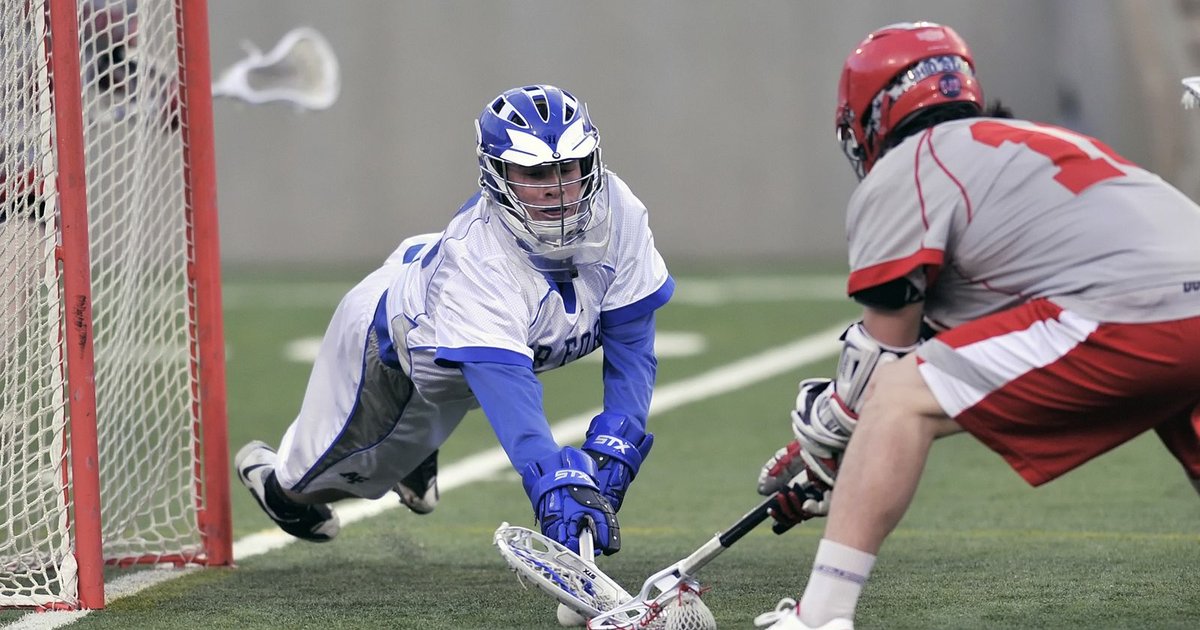
The Honest Answer: Similar Bones, Different Animal
Yes, lacrosse rules are similar to hockey rules in ways a hockey fan will recognize within five minutes of a first game: faceoffs, play behind the goal, man down penalty kills, and a premium on fast hands in tight space. Box lacrosse, the indoor version, is closer still, close enough that hockey players often call it the same game on a dry floor. But field lacrosse also borrows its shape from soccer and its set plays from basketball, and several of its signature rules, the closest to the ball rule on shots and the faceoff clamp among them, belong to lacrosse alone. This page keeps the exact ledger: what matches, what only looks like it matches, and what will surprise a hockey fan most.
| Feature | Lacrosse | Ice hockey |
|---|
| Restart after a goal | Faceoff at center, boys game; draw, girls game | Faceoff at center ice |
| Play behind the goal | Yes, the spot called X is prime real estate | Yes, behind the net is a working area |
| Penalties | Timed, team plays man down, penalty box | Timed, team plays short handed, penalty box |
| Offside shape | Fixed counts per half: at least 4 back, 3 forward, boys field | Blue line offside on entry |
| Goal size, field | 6 feet by 6 feet | 6 feet wide by 4 feet tall |
| Crease | Attackers may not step in | Goaltender trapezoid and crease rules differ |
| Substitutions | Through a box, on the fly in box lacrosse | On the fly, through the bench doors |
Where the Similarity Is Real
Start with the restart. Both games return to center after a goal and contest possession with a faceoff, and both treat the faceoff as a specialist skill worth its own practice time. In boys lacrosse the two players crouch with sticks flat on the ground and clamp, rake, or direct the ball to wing midfielders. The hockey version drops a puck between two sticks. The choreography differs and the strategic weight feels identical to anyone who has watched a team live or die on restarts.
Play behind the goal is the second true match. Lacrosse attackmen run offenses from X, the spot directly behind the cage, feeding cutters and dodging to either side as the defense turns its head. Hockey forwards work the same real estate behind the net for the same reason: the goalie cannot watch both the puck carrier and the front of the net at once. A hockey fan reading a lacrosse offense from behind the goal will feel at home immediately.
Man down play is the third. Personal fouls in lacrosse send a player to a penalty box for timed penalties while his team defends short, and the fouled team runs a man up offense with an extra passer. Hockey power plays and penalty kills run on the same arithmetic and the same patience: move the object faster than the defense can rotate, and shoot when a lane finally opens.
Box Lacrosse: The Version That Really Is Hockey Shaped
If field lacrosse is a cousin, box lacrosse is a sibling. The indoor game plays on a rink sized floor with boards that keep the ball alive, five runners and a goalie per side, and a thirty second shot clock that forces decisions the way hockey shift pressure does. Cross checking is a legal defensive tool indoors. Substitutions pour through doors on the fly. The goal shrinks to 4 feet by 4 feet in the major league game, and the goalie build grows to hockey goalie proportions. Hockey players crossing into box lacrosse adjust in weeks. Field players crossing into box need the same adjustment in the other direction, because the floor game punishes the wide, patient habits the field game rewards.
Where the Comparison Breaks Down
Offside is the first breakdown. Hockey offside polices a line: enter the zone legally and the whole team may follow. Field lacrosse offside polices a census: a boys team must keep at least four players counting the goalie on its defensive half and at least three on its offensive half at all times. Attackmen live in front of the midline and defenders behind it, with only midfielders free to roam. The result is a field that never fully empties at either end, which is why lacrosse transition looks like a series of waves rather than hockey end to end rushes.
The crease is the second breakdown. A lacrosse attacker may not step into the circular crease at all, and a goal scored with the shooter landing in the crease can be waved off. The goalie inside that circle owns real privileges, including a four second count to clear the ball in the boys game. Hockey crease rules have changed shape many times, but no hockey rule empties the area around the net the way the lacrosse crease does.
The third breakdown is possession after a missed shot. In lacrosse, when a shot misses and crosses the end line, the ball goes to the team with a player closest to the ball at that moment. Players sprint to the end line after every shot for this reason. Hockey has no equivalent: a missed shot is simply a loose puck. This single rule changes lacrosse shooting decisions, because a wild shot is not a turnover if your teammate wins the race behind the goal.
The Soccer and Basketball Debts
Calling lacrosse a hockey relative only tells half the family story. The field itself, 110 yards long and 53 1/3 to 60 yards wide in the boys game, with ten players a side in the boys game and twelve in the girls game, comes from the soccer branch of the family: wide space, positional units, and goals defended by a single goalkeeper. Set offenses borrow from basketball openly. Picks, rolls, feeds to cutters, and off ball screens structure a lacrosse possession the way they structure a half court set, and a coach who has run basketball motion offense will recognize lacrosse settled play on sight.
The girls game adds rules hockey fans will not find anywhere in their sport: shooting space, the three second rule inside the arc, and a draw instead of a faceoff. Those belong to lacrosse alone, and they make the girls game its own tactical world rather than a variation on anyone else theme.
What a Hockey Fan Should Watch First
Watch one quarter with three assignments. First, follow the player at X behind the goal and count how many possessions run through him. Second, watch a man down sequence and notice the defense rotating in a box and one shape that any penalty kill fan will read instantly. Third, after every shot, ignore the ball and watch the race to the end line, because that sprint is lacrosse in one image: a rule nobody borrowed, deciding possession in plain sight. By the end of the quarter the similarities will feel like a doorway rather than a destination, which is exactly what they are.
The Goalie Difference a Hockey Fan Notices Last
Hockey fans usually spot the shared rules in the order this page presented them, and the goalie difference sneaks up at the end. A lacrosse goalie plays inside a circular crease with privileges no hockey goalie owns: a clearing count after a save, protection from attackers entering his circle at all, and a defense that may run through that circle to help him. He also leaves the crease as a full participant in the clear, stick in hand, expected to throw a forty yard outlet pass like a midfielder. Hockey goalies have grown more mobile for decades and still play a position defined by the net. Lacrosse goalies play a position defined by the save, the call, and the first pass, in that order, every possession.
So the complete answer for a hockey fan is this. Bring your understanding of faceoffs, penalty kills, and play behind the goal, and it will serve you from the first whistle. Leave your assumptions about goalies, offside, and what happens after a missed shot at the door, because lacrosse kept those for itself.
Frequently Asked Questions
Which version of lacrosse is most like hockey?
Box lacrosse, by a wide margin. It plays indoors on a rink floor with boards, a shot clock, on the fly substitutions through doors, legal cross checking, and a small goal with a heavily padded goalie. Field lacrosse shares hockey restarts and penalty structure but plays at soccer scale and spacing.
Do lacrosse and hockey both have power plays?
In effect, yes. A timed personal foul in lacrosse leaves the penalized team man down while the other runs a man up offense, and the strategy mirrors a hockey power play: extra passer, patient rotation, and a shot the moment a lane opens. Lacrosse penalties can also be non releasable, meaning a goal does not end them, which has no common hockey equivalent.
Why does lacrosse allow play behind the goal?
Because the field and the goal placement allow it, and the offense gains the same advantage hockey offenses gain behind the net: the goalie must choose between watching the carrier and watching the front. The spot behind the lacrosse goal is called X, and many offenses are run by the attackman stationed there.
Is lacrosse offside the same as hockey offside?
No. Hockey offside is about crossing a blue line legally. Lacrosse offside is a player count: a team must keep a minimum number of players on each half of the field at all times. Only midfielders cross freely, which keeps both ends of a lacrosse field permanently populated.
Did lacrosse copy hockey, or the other way around?
Neither, in any simple sense. Lacrosse is far older, with Indigenous roots in North America long before organized hockey existed, and box lacrosse itself was shaped in the 1930s partly to fill hockey arenas in summer. The sports grew up in the same buildings and borrowed from each other as they went.