The Basic Setup: 6 Against 6
Each team plays with 6 players on the floor at a time, including the goalie. The usual breakdown is 5 runners and 1 goalie.
The goals are smaller than field goals, which changes shooting completely. A box goalie, heavily padded from head to toe, fills much of that smaller net, so shooters must fake, move the goalie, and finish with deception and quick release rather than power from distance.
The Shot Clock Changes Everything
Box lacrosse uses a shot clock. Once a team gains possession, it has a limited time, commonly described as a 30 second shot clock at most levels that use it, to put a shot on goal. Fail to shoot in time and possession turns over. Under international rules, a team also has 10 seconds to move the ball across the center line after gaining possession in its own half. There is no stalling in box.
The clock creates the box rhythm: win possession, push in transition before the defense sets, and if the break is not there, run a short, physical settled offense built on picks, rolls, and quick ball movement. Shots come early and often, rebounds are live battles, and goalies face a volume of close shots that builds field goalies faster than almost any drill.
How Play Flows on the Floor
Possession starts with a faceoff at center after goals and at period starts, contested by specialists with wing support, much like the field game but in a tighter space. After a save, the goalie outlets quickly, because transition is where box goals live. Defenders become attackers in two passes, and a slow change through the doors gives the other team a breakaway.
Settled box offense works in pairs and small groups. A pick on the ball, a roll to the middle, a pass across the floor to a shooter stepping into space, and constant off ball cutting through the middle define the style. Defenses switch, help, and recover in a space too small for a slow slide.
Cross Checking and Physical Play: The Honest Picture
Box lacrosse allows more body contact than field lacrosse, and cross checking is part of its reality. Players use the shaft between their hands to check and hold off opponents within the box rules, especially on defense and in loose ball battles along the boards. That does not mean anything goes.
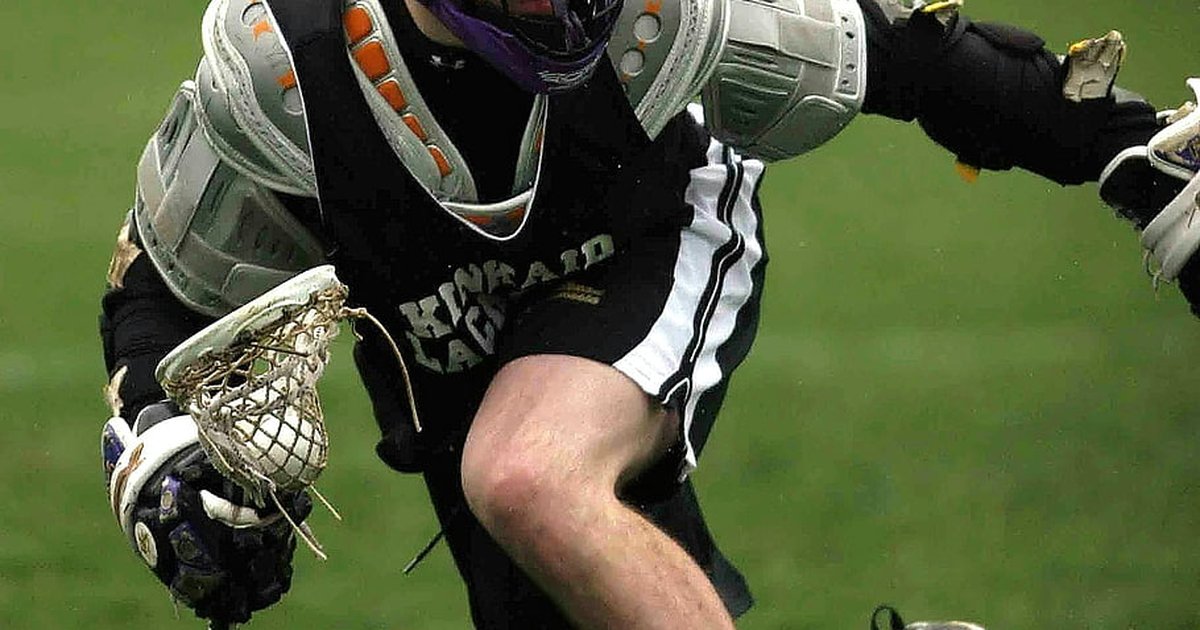
Players wear helmets, gloves, and pads suited to the indoor game, with many wearing additional rib and arm protection for board and cross check contact.
Box Versus Field: The Differences in One Table
| Feature | Box lacrosse | Field lacrosse |
|---|
| Players per side | 6 including goalie | 10 mens, 12 womens |
| Playing surface | Indoor rink sized floor with boards | Open field, about 110 by 60 yards |
| Goal size | 4 feet high by 4 feet 9 inches wide at pro and international level, 4 by 4 feet in many amateur leagues | 6 feet high by 6 feet wide |
| Shot clock | Yes, possession must produce a shot in limited time | Only at some levels |
| Contact | Cross checking allowed within box rules | Body checking in mens game, restricted in womens game |
| Substitutions | Through doors, often offense and defense units | Through a box at midfield, on the fly |
| Stick skills rewarded | Quick release, fakes, tight passing | Full field speed, outside shooting, long clears |
Read the table and the coaching value of box becomes obvious. A field attackman who plays box learns to finish inside. A field midfielder who plays box learns to pass under pressure. A field goalie who plays box learns to track fakes at close range.
Penalties and Power Play
Fouls in box send a player to the penalty box and give the other team a power play, the box term for man up play. Because the floor is small and the extra player is a large percentage of the team, power plays score at a high rate, and disciplined teams protect their record by staying out of the box.
For a new fan, the fastest way to follow box is to track three things: who wins transition in the first seconds after a save, who wins loose balls off the boards, and who stays out of the penalty box. Those three battles decide box games the way faceoffs and clears decide field games.
The Floor, the Boards, and the Goal: Box Dimensions That Change Play
Box lacrosse is played on a hockey rink with the ice removed or covered, which gives the game its defining geometry. The floor is roughly 180 to 200 feet long and 80 to 90 feet wide in the major leagues, surrounded by boards and glass that keep the ball in play. There are no out of bounds saves on shots the way field players know them: a missed shot hits the boards or the glass and comes back, which is why box teams crash for rebounds that would be change of possession plays outdoors.
The goal is smaller than the field goal, 4 feet wide and 4 feet tall in the major league game, against 6 by 6 outdoors, and the goalie who defends it wears padding closer to a hockey goalies kit, with a stick built for the smaller net. The crease is a semicircle in front of that goal, and the restraining area lines sit much closer than field players expect, compressing every possession into a smaller, louder space.
Positions in Box: Runners, Transition, and the Door System
Box teams dress runners rather than the fixed field positions. A runner is some blend of offense and defense, and most box systems sort players by side and by role: offensive specialists who come on for attacking shifts, defensive specialists who protect the house, and transition players who run both directions and decide games with their legs. Many teams substitute through the doors in the boards like hockey lines, sending fresh runners on as possession changes, which is why a box bench looks like a hockey bench and why the game never seems to stop.
Faceoffs exist in box but matter differently. Possession after goals is settled at center, yet the shot clock and the boards mean a lost draw is a problem for thirty seconds rather than a long defensive stand. The draw and faceoff specialists of the field game become one part of a runners job indoors.
A Field Player Watching Box for the First Time: What to Track
Watch the shot clock first, because every decision bends around it. Watch the picks second: box offense is built on picks and seals set close to the goal, legal within the box contact rules, and the two man game on one side of the floor creates most of the good shots. Watch the goalie third, because a box goalie faces more shots from closer range than any field goalie, and his outlet pass after a save starts the transition game. Finally, watch the doors. The substitution rhythm is the hidden engine of the sport, and once you see fresh defenders sprinting on as a shot clock dies, the whole game reads differently.
Equipment Differences a Field Player Notices First
A field player walking into a box game spots the goalie first: bigger pads, a bigger chest, a stick built for a 4 foot goal, and a stance that fills a smaller net. Then the runners gloves and arm protection register, built for a game where cross checks land legally and often. Field helmets cross over, sticks shorten toward the field short stick range, and the ball is the same solid rubber ball the field game uses, which surprises players who expected an indoor ball to be softer. It is not. Box is lacrosse at full hardness in a smaller room, and the equipment list is the rules list written in padding.
Youth box programs modify this picture for their ages as field programs do, with contact staged in across divisions. A family evaluating a box program should ask the same parent meeting questions they would ask outdoors, about checking stage, format, and equipment enforcement, and expect the same quality of answer.
Why Field Coaches Send Players Indoors
College and high school field coaches recommend box for reasons that trace directly to the rules in this article. The shot clock forces decisions at a speed the field game allows players to postpone. The small floor forces stick skills in traffic: catching in a crowd, finishing from tight angles, protecting the stick with bodies close on every side. The boards teach ground ball hunger, because every loose ball stays alive. A field attackman who spends a winter in box comes back with quicker hands and a shorter decision clock, and a field defender comes back comfortable with contact and picks. The transfer is the reason the indoor game keeps growing in field lacrosse country, and it starts with the rules that make box a different sport rather than a winter rental of the same one.
Frequently Asked Questions
Is box lacrosse played in the United States?
Yes. Box leagues, travel programs, and off season training leagues operate across the United States, and many top field players train in box to sharpen stick skills. The deepest box tradition is in Canada, where it is a primary form of the sport.
Do women and girls play box lacrosse?
Yes, girls and womens box programs exist and are growing, played under box rules adapted for their competition. Availability varies by region, so families should check local associations for girls box offerings.
Should a field player join a box league?
For most developing players, yes, if a well coached league is available. The tight space, shot clock, and rebound battles build catching, passing, and finishing skills that transfer directly to the field game.
How long is a box lacrosse game?
At the major league level, box games run four quarters of 15 minutes. Youth and amateur box formats shorten the periods and often use a running clock. The exact format is set by the league, so a family joining a box program should ask for the period length and clock rules at registration, the same question they would ask outdoors.
Is box lacrosse rougher than field lacrosse?
It is more physical in specific, legal ways: cross checking is a normal defensive tool indoors, picks are a core offensive weapon, and the boards keep contact plays alive. It is not lawless. Slashing, head contact, and fighting all draw penalties, and youth box leagues modify contact for their age groups just as field leagues do.