What You Need Before You Step On the Field
You play lacrosse with a stick, a ball, and protective gear matched to your game. Every field player carries a stick with a shaft and a head strung with a pocket that holds the ball. The goalie stick has a larger head. The ball is hard rubber, small, and fast, which is why the gear is not optional.
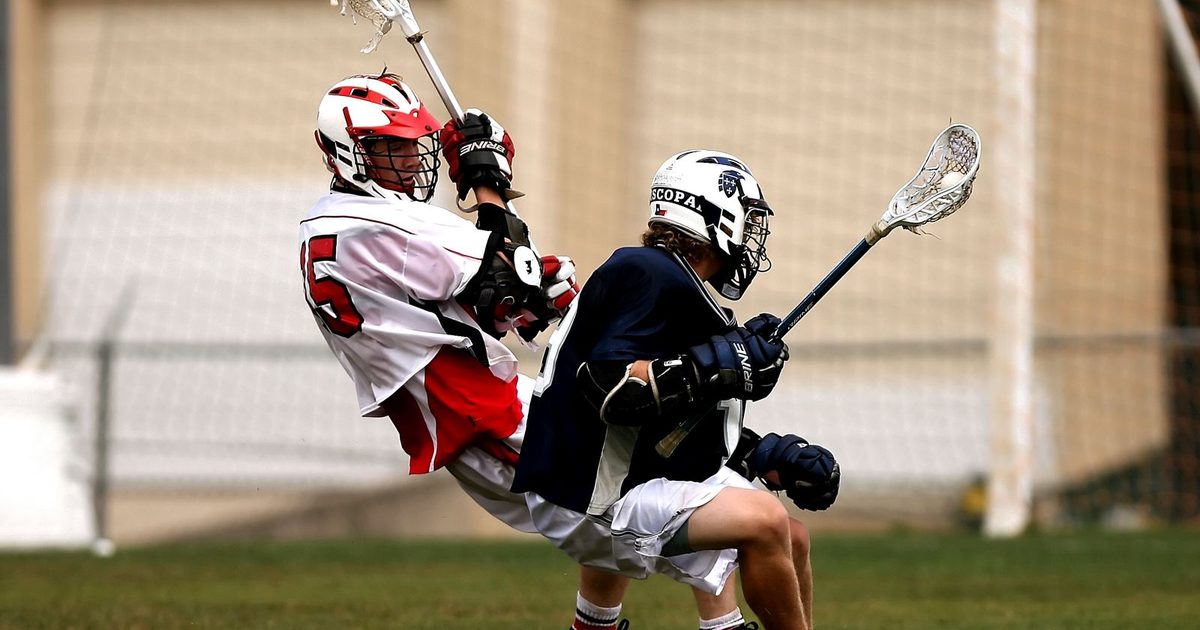
In the boys and mens game, players wear a helmet, mouthguard, gloves, shoulder pads, and arm protection. In the girls and womens game, players wear eye protection in the form of goggles and a mouthguard, with the goalie adding a helmet and body protection. Cleats help on grass and turf. Before a first practice, the honest checklist is short: stick, required protective gear for your game, mouthguard, cleats, and water.
Do not borrow the wrong game gear. A boys helmet does not replace girls goggles in a girls game, and field sticks, pockets, and legal checks differ between the games in ways officials actually enforce.
How a Game Starts
Teams line up by position. Attackers and defenders wait in their ends, midfielders take the middle, and the specialists meet at center. In the mens game, two faceoff players crouch over the ball. In the womens game, two players take the draw with sticks held up and the ball between the pockets.
On the whistle, the center contest decides first possession. Wings race in, someone scoops or catches the ball, and the game is suddenly moving. That first ten seconds teaches the sport: a restart, a ground ball fight, a quick decision to push fast or settle down, and everyone sprinting to home areas.
If your team wins the restart, value the ball. If it loses the restart, the first job is defense, not chasing. Get back, protect the middle, and make the other team score against a set defense.
The Flow of Play, Phase by Phase
A useful way to understand lacrosse is to watch it in four repeating phases.
| Phase | What is happening | What good teams do |
|---|
| Restart | Faceoff or draw at center | Win possession or win the ground ball fight |
| Transition | Ball moving between ends, numbers unsettled | Push for a fast break or recover on defense first |
| Settled offense and defense | Both teams in home areas, 10 against 10 or 12 against 12 set | Dodge, pass, slide, and create or stop a clean shot |
| Clear and ride | Defense trying to exit, attack pressuring | Clear with passes up the sideline, ride to force a turnover |
Most goals come from either a clean transition chance or a settled dodge that forces a slide and a pass to the open player. Most turnovers come from rushed transition decisions and from clears that throw into pressure. New players improve fastest by slowing down in settled play and speeding up only when the numbers are clearly in their favor.
Scoring and What Happens Next
To score, shoot the ball fully into the goal. Attackers shoot from the front, from the wings, and on feeds while cutting through the middle. Shots on the run are common at midfield and attack. Crease play matters too: no attacker may step into the crease, so finishes near the goal require body control and timing.
After a goal, teams reset at center for the next faceoff or draw. After a save, the goalie starts the clear. After a missed shot that goes out of bounds, the player closest to the ball where it left the field earns possession for the backup, so sprinting behind the goal on every shot is a real habit, not a coaching slogan.
Substitutions and Why Players Run On and Off
Lacrosse substitutes on the fly. Midfielders change most often, in full lines at lower levels and in specialist pairs at higher levels. A faceoff specialist may win the ball and exit. A defensive midfielder may enter for a possession, clear the ball, and exit for an offensive player.
For a new player, the rule of thumb is simple: come off when you are gassed before you become a defensive liability, call your position as you enter, and sprint to your home area first. The ball will find organized players.
Common Stoppages a New Fan Will See
Play stops for goals, for the ball going out of bounds, for fouls, for injuries, and at the end of periods. It also stops for offside, for a crease violation, for a shot clock or clearing violation at levels that use those clocks, and for a broken stick or lost required equipment.
Three stoppages confuse beginners most. First, a flag thrown in the mens game means a foul was seen but play continues until the fouled team loses possession or scores, so the offense gets its chance. Second, a free position in the womens game means play resets with the fouled player holding the ball and opponents at a set distance.
Your First Game Checklist as a Player
Warm up your hands with wall ball or partner passing. During the game, keep your stick up as a target, call for the ball by name, scoop through every ground ball and run out of it, and on defense stay between your player and the goal before you reach with your stick. After every whistle, look at the official, find your home area, and be ready early.
Play hard, keep your head up, and expect the game to feel fast for two weeks and normal by the fifth game. Everyone who loves this sport started exactly there.
The Field and the Numbers on It
A full size boys field measures 110 yards long and between 53 1/3 and 60 yards wide, with a goal centered at each end inside a crease circle of 9 feet radius. The girls field is larger, about 120 by 70 yards at the senior level, with an 8.5 foot crease radius and restraining lines that cap the number of players in each scoring area. Both games mark a center line and a center circle or faceoff X where restarts happen, wing areas where midfielders wait during restarts, and substitution boxes at midfield where players enter and leave on the fly. Youth fields shrink every one of these dimensions so young players touch the ball more and run less empty distance.
The goal itself is 6 feet wide and 6 feet tall in both games. That small target explains a habit new fans notice: shooters aim for corners and shoot on the move, because a goalie covers a large share of a 6 by 6 frame from a set position.
A Quarter by Quarter Walkthrough
The opening minutes belong to the restart specialists and the goalies. Faceoff and draw wins decide who settles first, and the first clears show which team handles pressure. The middle of a game belongs to settled offense: dodges from the wings and from behind the goal, defensive slides, and the second pass that finds the open shooter. The late game belongs to conditioning and discipline. Tired defenders lunge, tired attackers force passes, and the team that keeps its spacing and its stick protection usually takes the final goals. Youth games compress the same story into shorter periods with a running clock, which is why youth coaches teach end of game habits, protecting a lead by valuing possession, from the very first season.
Five Terms That Unlock the Broadcast
Ride: the effort by a team that just lost the ball to pressure the clear and win it back before midfield. Clear: the attempt to move the ball out of the defensive end after a save or turnover. Slide: the defensive rotation where a second defender leaves his player to stop a dodger who beat the first. Man up and man down: the numbers advantage after a penalty, called extra man offense in many programs. Ground ball: any loose ball on the turf, and the stat that quietly predicts most youth results, because the team that scoops more loose balls simply owns more possessions.
Watching as a Fan: Where to Look
New fans watch the ball. Experienced fans watch the spaces the ball is about to enter. On offense, look one pass ahead: the cutter moving as the pass travels is the scoring play being built. On defense, look at the player guarding nobody yet, the slide defender, because his first step decides whether a dodge becomes a shot or a pass. On restarts, look at the wings, where the ground ball fight that decides possession actually happens. And after every save, look at the goalie hands: a quick outlet throw means a fast break is coming, while a held ball means both teams get to set. Four habits, and a first time spectator is suddenly reading the same game the coaches are coaching.
Penalties and Player Advantage in Plain Terms
When a player commits a foul in the mens game, the official may throw a flag and let play continue until the offended team loses the ball, because stopping play immediately would punish the team that was fouled. When play does stop, the fouling player serves time in the penalty box and his team plays a man down while the other team runs its extra man offense. Technical fouls, the smaller category, cost thirty seconds or possession. Personal fouls, including illegal checks and slashing, cost one to three minutes. In the womens game, fouls more often produce free position restarts and cards rather than timed penalties. A new fan who separates those two systems, timed box penalties in one game and free positions plus cards in the other, will follow almost every whistle in either version.
Frequently Asked Questions
How long is a lacrosse game?
Game length scales with level. Youth games use short periods and a running clock, often totaling well under an hour of wall time. High school games run longer with a stopped clock at many levels, and college games use four quarters of fifteen minutes in the mens game. Check your league sheet for the exact format, because clock rules change end of game strategy.
How many players are on the field in lacrosse?
The boys and mens field game plays 10 against 10: three attack, three midfield, three defense, and one goalie per side. The girls and womens game plays 12 against 12: four attack, three midfield, four defense, and one goalie. Youth formats reduce both numbers on smaller fields.
What is the difference between a faceoff and a draw?
The faceoff restarts the boys game: two players crouch with sticks flat on the ground and the ball between the heads, fighting to clamp and direct it. The draw restarts the girls game: two players stand with sticks held up together and the ball between the pockets, pulling up and out to send it airborne. Both restart play after goals and at period starts.
Can a player touch the ball with a hand?
Only the goalie, and only inside the crease, may stop the ball with a hand, and even the goalie may not pick it up or carry it by hand. Every other player must use the stick for every touch. A field player who grabs the ball commits a foul and loses possession.
What happens when the score is tied at the end?
Most levels play a sudden victory overtime: the first goal wins. Formats differ on period length and on whether the overtime starts with a faceoff or draw, but the principle is constant across the sport. Youth leagues sometimes settle for a tie in regular season play, which the league sheet will state.