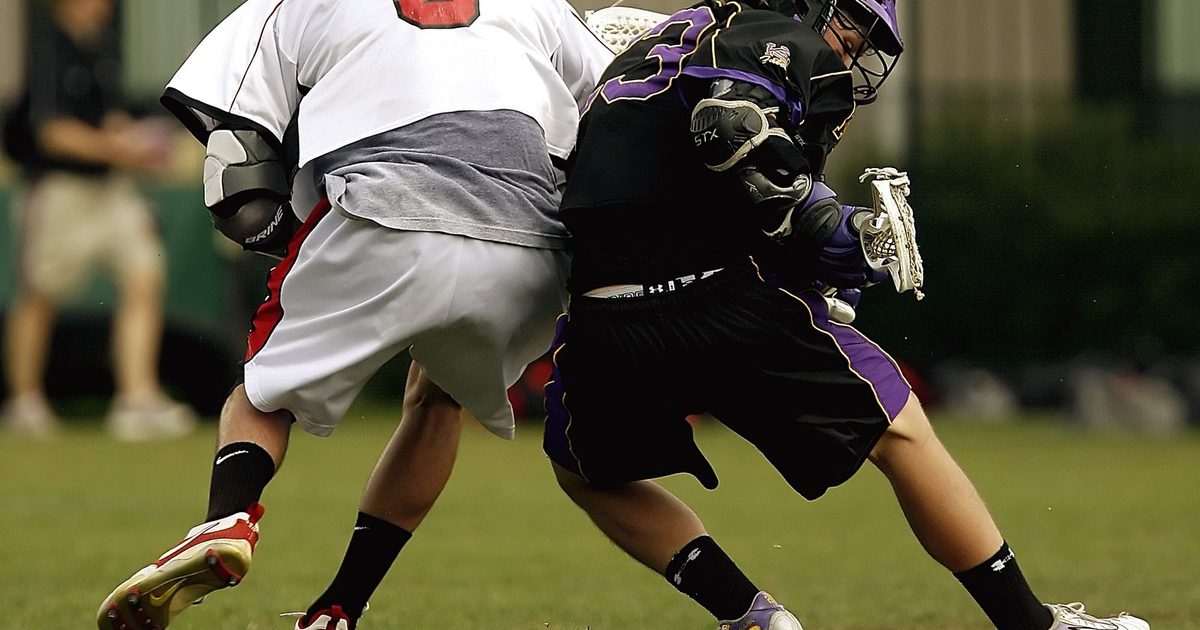
Hitting in Lacrosse Means Body Checking, and It Has Limits
In boys and mens lacrosse, body checking is part of the game. It is also one of the most regulated parts. A body check is not a free hit.
Families new to the sport should learn the legal version first. When a check is legal, it looks firm, balanced, and almost boring. When a check draws a flag, it usually fails one clear test that officials are trained to see: where it landed, where it came from, or when it arrived.
This article covers the boys and mens field game. The girls and womens game restricts body contact and does not use body checking in this form.
What a Legal Body Check Looks Like
A legal check starts with the feet. The checker approaches under control, keeps his head up, and makes contact from the front or the side with the shoulder or torso, above the waist and below the shoulders, while the opponent has the ball or is within 5 yards of a loose ball, and the checker keeps both hands on his stick through the contact.
Use this checklist, the same one good coaches teach:
| Test | Legal | Likely flag |
|---|
| Target | Front or side, between waist and shoulders | Head or neck, back, below the waist |
| Timing | Ball carrier or loose ball contest, contact on time | After the pass or shot is gone, late |
| Approach | Under control, feet on the ground, head up | Launching, leading with the helmet, blind side with excess force |
| Hands and stick | Body contact, stick not swung at the head | Cross check to the neck, slash, stick to the head |
A check that passes all four tests is good lacrosse. A check that fails one test is how players end up in the penalty box and how opponents get hurt.
Checks That Draw Flags
Contact to the head or neck is the top priority for officials. Any body check that targets or makes primary contact with the head or neck, and any check by a player who lowers his head or launches into that area, is a serious personal foul.
Checks from behind are illegal because the player cannot see or brace for them. A push or body check into the back, especially near the boards in box play or near the crease and sidelines in field play, draws a flag even at moderate force.
Late hits are the third family. Once a player has passed or shot the ball, the window to check him closes quickly. A hit that arrives after the play has moved on is illegal contact, even if the target area was otherwise legal. Goalies and players in vulnerable positions get extra protection in practice, and officials err on the side of the flag.
Other hits that regularly draw whistles include checks below the waist, tripping, cross checking with the shaft between the hands driven into an opponent, spearing or leading with the helmet, and any hit on a defenseless player who is scooping, looking up for a pass, or in the act of shooting in a way the rules protect.
Stick Checks Are Different From Body Checks
Not all contact is body checking. A poke check, slap check, or lift check uses the stick against the opponent stick or gloves to dislodge the ball. Legal stick checks are controlled and aimed at the stick or gloved hands holding it. The moment a stick check becomes a slash, hits the head, or swings with excess force, it becomes a foul.
How Youth Levels Restrict Checking
Youth lacrosse under USA Lacrosse age based rules deliberately limits body checking at young ages. The youngest divisions focus on stick skills, spacing, and positioning, with body contact restricted to legal positioning and incidental contact rather than take out checks.
Do not expect an adult rule set at a youth game. Field size, roster size, and checking rules all scale with age on purpose, so that a new player learns to scoop, pass, and defend with his feet before he learns to deliver or absorb a full check.
What Happens After an Illegal Check
An illegal body check is a personal foul. The player serves penalty time in the box, his team plays man down, and repeated or severe fouls add time or end his day. While a team is man down, its defense packs tighter, its clear slows down, and its offense may not see the ball for a full possession.
If you are a parent, watch the hit through the four tests in the table. If you are a player, run the same tests before you commit your shoulder. Lacrosse rewards physical play. It punishes reckless play every time.
Penalty Consequences in Numbers
A personal foul for an illegal body check costs the player one to three minutes of penalty time depending on severity and the officials judgment, served in the penalty box while the team plays a man down. A non releasable penalty means the full time is served even if the other team scores; a releasable penalty ends early when the opponent scores. Repeated personal fouls accumulate, and a player who collects enough personal foul minutes in a game can be disqualified under the rules of the level. Ejection level fouls, such as a deliberate check to the head, can end a player day and carry into the next game under many league codes. The arithmetic matters to coaches: two reckless checks in a close game can hand the opponent four minutes of extra man offense, which at youth and high school levels converts to goals at a high rate.
How Officials Are Trained to See a Check
Officials read a check in a fixed order: approach, target, contact, and timing. A checker who arrives under control with his head up gets the benefit of close calls. A checker who leaves his feet, drops his head, or extends through the opponent loses that benefit before contact even lands. Officials also watch the second before contact for the tell of a late hit: the ball visibly leaving the stick while the checker is still closing distance. Players who understand the officials sequence can self coach in real time. If the pass is gone, pull up. If the angle is behind, circle instead of hitting. If the head is the first thing in line, the check does not exist.
Teaching Legal Checking to Young Players
Coaches introduce body contact in a strict order at youth level. First comes positioning: beating an opponent to a spot and holding it legally without any check. Second comes the mirror drill, where a defender moves with a ball carrier using feet only. Third comes controlled contact against pads or a stationary partner at walking speed, rehearsing target area and both hands on the stick. Only after those stages does live checking appear, and USA Lacrosse youth rules keep take out checks out of the youngest divisions entirely. A program that skips the early stages produces players who hit hard and defend badly, because they reach for contact before their feet learn the job.
Body Checking in Box Lacrosse Is a Different Conversation
Families who watch indoor box lacrosse after learning the field rules notice heavier contact near the boards and wonder whether the field limits still apply. Box lacrosse plays under its own rule sets, with smaller spaces, boards that change the danger of a check from behind, and its own foul structures. Some contact that field officials flag quickly is judged differently indoors, while checks from behind into the boards draw severe penalties in both games. The safe family rule is to never import expectations from one version into the other. Ask which rule set governs the game in front of you, and judge the hitting you see against that code and no other.
What a Player Should Do Instead of the Illegal Check
Every illegal check has a legal play hiding inside it. The late hit becomes a sprint back into the defensive shape, which prevents more goals than any hit after the pass. The check from behind becomes a loop around to the front side and a lift check on the bottom hand as the carrier turns. The high hit becomes a target correction: drop the shoulder line to the torso and let the carrier come to you. The launched hit becomes two short steps and a balanced stand up stop that keeps the defender in the play for the next pass. Coaches call this playing defense with the feet and the brain, and it is not a softness doctrine. The defenders who master the replacements stay on the field, out of the box, and in the game during the minutes when reckless checkers are watching from the sideline.
Frequently Asked Questions
Can you body check in girls lacrosse?
No, not in the boys and mens sense. The girls and womens game restricts body contact. Defense is played with footwork, body position, and controlled stick checks only, and pushing or charging is a foul.
Can you check a player who does not have the ball?
Only in a narrow loose ball situation, when the player is within 5 yards of the loose ball and directly contesting possession, and only within the same target and timing limits. Checking a player away from the play is interference or illegal body checking and draws a flag.
What is a cross check in lacrosse?
A cross check is using the shaft of the stick between your two hands to check or push an opponent. It is illegal as a body checking method in field lacrosse and is called regularly when the shaft, rather than the body, delivers the force.
Is body checking allowed in womens lacrosse?
No. The womens and girls game does not use body checking. Defense is played with footwork, body positioning, and controlled stick checks, and pushing, charging, or blocking with the body is a foul. The checking rules in this article describe the boys and mens field game only.
What is the penalty for an illegal body check?
An illegal body check is a personal foul. The player serves one to three minutes in the penalty box, the team plays man down, and severe or repeated fouls add time or end the player day. Checks targeting the head draw the longest penalties and can bring ejection under many rule sets.