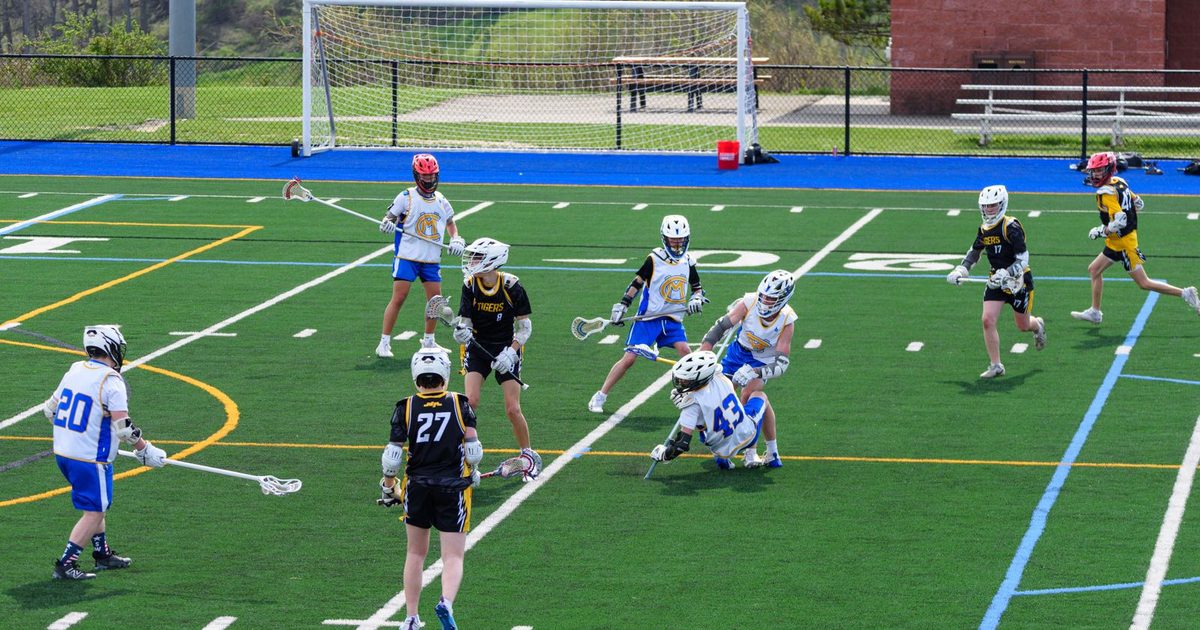
Age Based Divisions
Youth lacrosse groups players by age into divisions, so children compete against peers of similar size, speed, and experience. Leagues verify age and assign players to the division that fits, and a player who is large or skilled for his or her age still plays in that age division.
Because divisions are age based, rules progress with the division. What is allowed for older youth players, especially around checking, stick length use, and full field play, is not allowed for the youngest players. At the start of each season, ask one question at the parent meeting: what are the specific modifications for our division this year?
Smaller Fields and Fewer Players
Young divisions play on smaller fields, often with fewer players per side than the full 10 against 10 in the boys game or 12 against 12 in the girls game. The logic is simple and it works.
| Modification | What it looks like | Why it exists |
|---|
| Smaller field | Shorter and narrower than a full field | More touches, shorter runs, easier coaching |
| Fewer players | Small sided formats at young ages | Less standing, more decisions per player |
| Shorter games | Shorter periods than older levels | Attention, safety, and learning over endurance |
| Modified restarts | Faceoffs or draws adjusted or limited in some formats | Keep play flowing, share possession chances |
On a small field, a beginner cannot hide and cannot be hidden from. Every player scoops, passes, defends, and shoots in every game. That repetition is the entire point of youth lacrosse, and it is why a parent should judge a program by touches and smiles in the youngest divisions, not by the scoreboard.
Modified Checking: The Rule Parents Ask About Most
Checking is where boys and girls youth rules need separate explanations.
In boys youth lacrosse, body checking is restricted at young ages and introduced gradually. The youngest players learn defensive positioning, stick checks within strict control, and playing the ball without take out body checks.
In girls youth lacrosse, body contact stays restricted at every age, and stick checking itself is modified at young ages.
In both games, mouthguards and required protective gear are enforced strictly at youth levels. A player without a mouthguard or with improper eye protection in the girls game does not play until it is fixed.
Stick and Equipment Rules at Young Ages
Youth stick rules focus on safety and skill honesty. Pocket depth is checked so a beginner is not playing with an illegal pocket that holds the ball for him.
Helmets in the boys game must fit properly, gloves and pads must be worn as designed, and girls goggles must be the approved type for the game. Coaches do a gear check at the first practice for a reason.
Common Youth Whistles and What They Mean for Learning
Expect more whistles in youth games, not fewer. Officials stop play to teach as well as to enforce. You will hear offside and restraining area violations as players learn home areas, crease violations as attackers learn to control their momentum, and possession changes for loose ball push or holding calls that would be let go at older levels.
Many youth formats also limit how long a dominant team can keep a faceoff or draw specialist in place, require a set number of passes before a shot in the youngest formats in some leagues, or use running clocks to keep games on schedule. These are local and division choices within the national framework.
Why the Modifications Exist
Every modification answers the same question: what does a child of this age need in order to learn lacrosse safely? Smaller fields give touches. Fewer players give decisions. Staged checking gives time for feet and stick control to develop before force arrives. Age based divisions give fair matchups. Shorter games give quality over exhaustion.
Parents support that system best by cheering effort and clean skill, by letting coaches coach the modifications instead of arguing for adult rules, and by practicing the basics at home: wall ball, ground balls in the yard, and catching with soft hands. A youth player who masters those three things is ready for every rule the next division adds.
Division by Division: What Changes as Players Age
| Division | Field and format picture | Checking picture | Stick picture |
|---|
| 6U | Smallest fields, very small sided, short running clock games | No body checking; positioning only in the boys game, modified stick play in the girls game | Shortest sticks; boys capped by the waist height guidance, smaller girls sticks allowed |
| 8U | Small sided on a shortened field | Boys: no take out checks, controlled stick checks; girls: modified checking | Boys short sticks 37 to 42 inches; no long poles in the boys game |
| 10U | Larger small sided formats, more set positions | Boys: limited body contact under control; girls: modified checking continues | Boys long poles appear at 47 to 54 inches with a team limit |
| 12U | Near full formats at many programs | Boys: fuller checking within youth limits; girls: fuller checking within the girls standard | Regulation stick ranges begin in both games |
| 14U | Full field play is common | Checking approaches the high school standard while youth protections remain | Position specific sticks and the girls legal list matter |
Local leagues adopt the national framework with their own sheets, so the table is a map rather than a contract. The direction never changes though: every division adds exactly the complexity the next age can handle, and no division borrows rules from two levels up.
The Parent Meeting Questions That Matter
Five questions at the first parent meeting prevent a season of confusion. Which checking stage does our division use this year? What field size and roster format will games use? How long are periods and is the clock running or stopped? Which stick rules will officials enforce at our level, including pocket checks? What is the leagues policy on playing time and on players trying goalie or the draw? Write the answers down. Half the sideline arguments at youth games are really two families working from different answers to those five questions.
How to Watch a Youth Game Like a Coach
Watch the ground balls first. In youth lacrosse the team that scoops more loose balls owns the game, and the stat needs no scorebook: just count which color picks up the ball after it hits the ground. Watch spacing second: young teams that spread out score, young teams that swarm the ball stall. Watch the goalie clear third, because a calm outlet pass is the clearest sign of good coaching at youth level. A parent watching those three things sees the same game the coach sees, and post game conversations with a young player get much easier.
Equipment Enforcement at Youth Level
Youth officials check equipment with a strictness that surprises parents used to older levels. A boys player whose helmet does not fit, whose shoulder pads lack the required chest standard marking, or whose mouthguard is missing does not play until the problem is fixed. A girls player whose eyewear is not the approved type for the game, or whose stick pocket fails the depth tests, sits for the same reason. Programs run a gear check at the first practice precisely so these fixes happen in a parking lot in March rather than at a tournament gate in May. Parents help most by treating the home checklist as part of the sport: stick, required protection, mouthguard, water, checked the night before every game.
Scorekeeping, Standings, and What Programs Deemphasize on Purpose
Many youth programs keep score during games but soften what the score means afterward: no published standings at the youngest divisions, no playoffs that reward running up margins, and equal playing time rules that keep the whole roster developing. Parents sometimes read this as a lack of competitiveness. It is the opposite. The programs are protecting the repetition system that builds competitive players later, because a nine year old who touches the ball forty times in a loss develops faster than one who watches a star win a trophy. By 12U and 14U the competitive frame firms up, standings and tournaments arrive, and the players who thrived are the ones the soft years fed with touches. Judge a young program by its third season players, not its first season banners.
Frequently Asked Questions
Does my child need experience to join youth lacrosse?
No. Youth divisions are built for true beginners. Most programs lend or help source starter gear, teach from the first scoop, and rotate new players through positions so they learn the whole game.
Why did the official stop play when no one was hurt?
Youth officials stop play for teaching and safety reasons that include improper equipment, a stick on the ground in a dangerous spot, a player in the crease, or a checking situation that needs correction before someone does get hurt. A quick whistle at this level is good officiating.
Can my child play up in an older division?
Age based rules generally keep players in their age division, and playing up is a league decision, not a parent decision. Size alone is not the test. Stick skill, game understanding, and safety against older checking are what a league should weigh.
What age divisions does youth lacrosse use?
USA Lacrosse youth play is organized in two year age bands: 6U, 8U, 10U, 12U, and 14U, based on the player age at the cutoff the league uses. Each band carries its own field size, format, checking stage, and stick rules, and leagues verify age at registration so players compete against genuine peers.
Why are youth lacrosse fields smaller?
Smaller fields produce more touches, more decisions, and shorter recovery runs for young players. On a full field, a beginner can go minutes without the ball reaching her area. On a youth field the ball finds every player in every game, and that repetition is how beginners become players.